

05 Aug Is Your Child in Danger? 3 Crucial HFMD Warning Signs You Can’t Ignore
Is Your Child in Danger? 3 Crucial HFMD Warning Signs You Can’t Ignore
By Island Hospital | 5 August 2026. 10:00:00 AM
Hand, Foot, and Mouth Disease (HFMD) is often dismissed as a “mild” childhood milestone. But there is nothing mild about a 2:00 AM standoff with a toddler who is terrified to swallow, or the sharp, stinging reality of an adult catching a “kid’s virus” that feels anything but childish.
When you’re in the thick of it, clinical definitions don’t help much.
This guide covers the reality, tactical pain management, the household logistics of a “quarantine,” and the surprising post-recovery symptoms that no one warns you about.
(If you or a family member would prefer to read this guide and its medical details in Chinese, you can also refer to Island Hospital’s translated article here).
Let’s go beyond the basics to help your child feel better.
What is HFMD?
HFMD is a highly contagious viral infection usually caused by the Coxsackievirus A16 or Enterovirus 71. While it is famous for the hallmark rash on the hands, feet, and mouth, it actually starts as a gastrointestinal and respiratory invader.
The Timeline
- Days 1–2 (The Incubation)
Your child is already contagious but asymptomatic. You might notice subtle clues like a slight fussiness or a usual runny nose that masks the coming storm. - Days 3–5 (The Peak)
Fever makes its entrance, followed closely by painful mouth sores (Herpangina) and the signature external blisters. This is the hardest stretch for hydration and comfort. - Days 6–10 (The Scabbing)
The fever retreats, but the blisters begin to itch, dry out, and scab over as the body successfully evicts the virus.
Recognising the Symptoms & Diagnosis of HMFD
In most cases, diagnosis is clinical. This means a paediatrician can typically identify HFMD through a physical examination of the lesions and a review of the child’s recent symptoms, rarely requiring blood work or throat swabs.
The Symptom Progression
HFMD follows a distinct “top-down” pattern that can help you distinguish it from a common cold or chickenpox.
Phase 1: The Prodrome (Pre-Rash)
Before the first spot appears, the body signals an internal struggle. Watch for a sudden moderate fever, a sharp decrease in appetite (due to early throat discomfort), and general lethargy or irritability.
Phase 2: Herpangina (The Mouth Sores)
These aren’t your typical canker sores. They usually begin as small red dots on the back of the throat, tonsils, or soft palate. They quickly evolve into painful, fluid-filled blisters that make swallowing liquids or solids a challenge.
Phase 3: The Distal Rash (Hands & Feet)
The namesake rash usually appears 1–2 days after the fever starts. Look for:
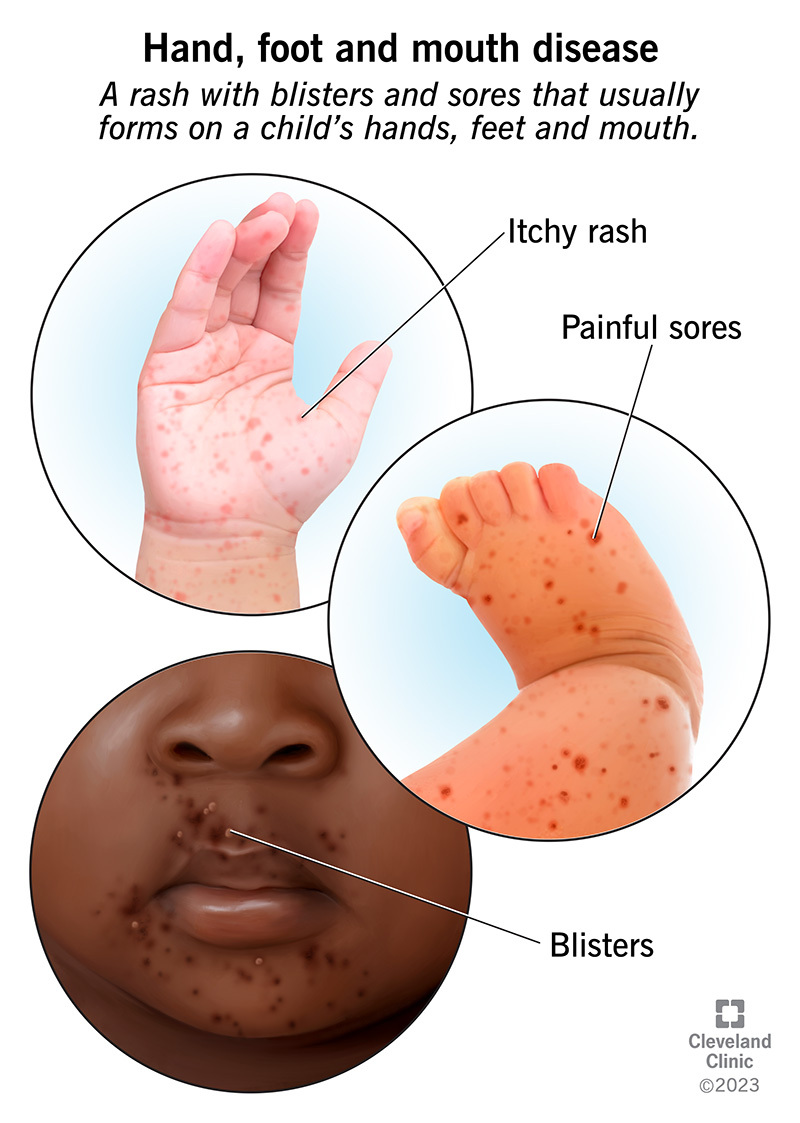
- Appearance: Flat or slightly raised red spots, sometimes with a gray “teardrop” center (vesicles).
- Location: Primarily the palms of the hands and soles of the feet.
- Atypical Areas: In younger children, it is common to see the rash spread to the knees, elbows, and “diaper area.”
Pro Tip:
Do the “pressure test”. Unlike many viral rashes, the HFMD rash is often not itchy initially, but it can be quite tender to the touch.
If your child is avoiding walking or holding toys, it may be due to the sensitivity of the blisters on their extremities.
Managing the Pain & Recovery at Home with HFMD
HFMD is a viral battle that antibiotics can’t fight. While the immune system works to clear the infection, your management strategy should be laser-focused on two metrics which are pain suppression and fluid intake.
If the pain is controlled, the hydration follows. When both are managed, the recovery is already underway.
1. Hydration
Dehydration is the number one reason children are hospitalised with HFMD as it hurts to swallow or drink.
- The Strategy
Avoid acidic or salty liquids (orange juice, lemonade, or tomato soup) which can burn open mouth sores. - Optimal Choices
Cold milk, chilled water, or electrolyte-replacement drinks are highly recommended during this period. - Prepare Slushies
Use a blender to turn electrolyte drinks into slushies. The cold numbs the throat, making it easier to hydrate.
2. Food Intake
Think of this as the “Ice Cream Diet” phase. Texture is everything.
- Best Options
Yogurt, pudding, applesauce, or chilled fruit purees. - Pain Relief via Food
Frozen treats like popsicles or fruit bars are double-duty as they provide hydration and act as a temporary local anesthetic for mouth sores.
3. Medication & Safety
- Pain Management
Alternating Acetaminophen (Tylenol) and Ibuprofen (Advil/Motrin) can help maintain a steady level of comfort and keep fevers manageable. - Do Not Use Aspirin
Never give aspirin to children or teenagers. It is linked to Reye’s Syndrome, a rare but life-threatening condition that causes swelling in the liver and brain. - Use a Mouthwash
Ask your pediatrician about a “BMX” or “Magic” mouthwash (usually a doctor-approved mix of liquid antacid and antihistamine) to coat the sores before mealtime.
When to Call the Doctor
While most cases are mild, seek medical attention immediately if you notice these alarming symptoms in your child:
How to Stop the HFMD Spread at Home
HFMD is notoriously persistent, spreading through saliva, blister fluid, and most stubbornly feces.
To keep the rest of the house from contamination, you need a containment protocol. To do this, you need to aim for consistency in the following areas:
| Focus Area | The Tactic | Why it Matters |
|---|---|---|
| Hand Hygiene | Implement the 20-second rule | Wash your hands like you’re prepping for surgery. Do it after every diaper change, every nose-wipe, and before you even touch a kitchen handle. This breaks the contamination chain. |
| Dining | Isolate utensils | Saliva is a primary highway for the virus. Assign a separate or dedicated plate, cup, and towel for your kid. Do not share food and drinks. |
| High-Touch | Use bleach-based wipes | The virus can linger on hard surfaces for days. Use a bleach-based cleaner or a virus-rated disinfectant on areas like doorknobs, remotes, and light switches. |
| Comfort Items | Put plushies and soft toys away | If a plushie has been snuggled (or drooled on), it’s a carrier. Either run it through a hot wash cycle or, if it’s delicate, tuck it away in a sealed bag for a few days until the virus dies. |
HFMD blisters and nighttime itching can shatter even the best sleep routines, leaving both you and your child exhausted. While lotions treat the skin, a structured environment treats the restlessness. Discover how to reclaim your nights and balance their sleep cycle with these 7 Effective Tips to Help Your Child Sleep Better.
Staying Safe As a Pregnant Parent
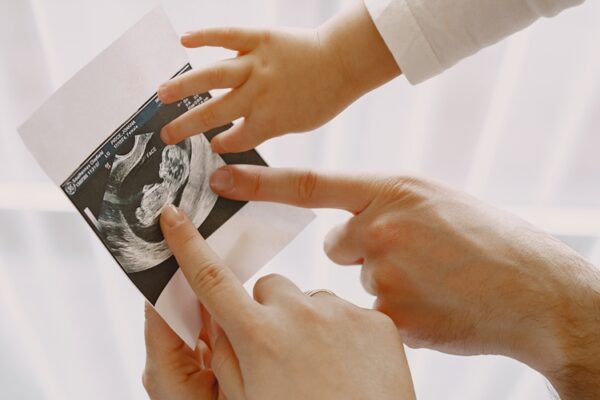
Discovering your child has HFMD while you are pregnant can be an added stress. The most important thing to know is that you shouldn’t panic.
- The Reality
Most adults have some level of immunity, and for the vast majority of pregnant women, the virus behaves like a standard cold. - The Main Concern
The primary risk occurs if you contract the virus very close to your due date, as it can be passed to the baby during delivery. Newborns have brand-new immune systems and need extra protection from the virus. - Your Strategy
Double down on the “20-Second Rule.” If you can, let your partner or another adult handle the “high-exposure” tasks like diaper changes. If you develop a fever, a sore throat, or any unusual spots, immediately call your OB-GYN doctor. They are there to monitor you and give you peace of mind.
The Strategy to Gently Say “No” to Your Kid
Explaining physical boundaries to a sick, clingy toddler is one of the hardest parts of being a “pregnant medic.” You want to comfort them, but you also have to protect yourself and the baby.
Here is a way to frame this that is gentle, age-appropriate, and guilt-free:
1. Reframe the “No”
Instead of “Don’t touch me” or “No kisses,” which can feel like a rejection to a toddler, try shifting the focus to new ways to cuddle.
- The “Hug From the Back”: “My tummy is a little crowded right now! Let’s do a ‘backpack hug’ where you snuggle my back while we watch a movie.”
- The “Butterfly Kiss”: “My mouth is resting, but my eyes want to give you butterfly kisses (eyelash flutters)!”
- The “Magic Hand Squeeze”: “I can’t do big kisses today because I don’t want your ‘owies’ to jump on me, but I can hold your hand tight. Can you feel my love through my fingers?”
2. Use a Mask
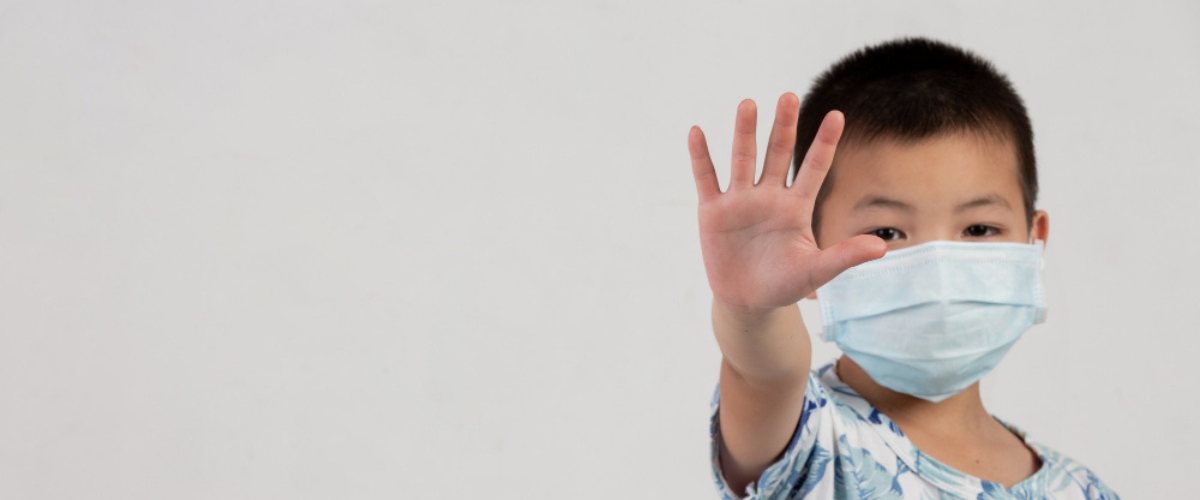
If your child is a “face-grabber,” wearing a standard surgical mask can be a literal and visual barrier.
- How to explain it: “I’m wearing my doctor mask today so I stay strong to help you get better! It’s my superhero shield.”
3. Set Up a Comfort Station
Create a spot on the couch where you can be close without being in the line of fire.
- The Setup: Use a large nursing pillow or a “body bridge” of stuffed animals between you.
- The Script: “This is our snuggle island. You stay on your side of the pillow, and I’ll stay on mine, and we can hold hands in the middle.”
A Note for Mums:
Give yourself grace. If you have to lean back when they reach for a kiss, or if you find yourself constantly washing your face after a snuggle, that doesn’t make you a “cold” parent.
It makes you a strategic one. You are protecting the health of the whole family, including the little one who hasn’t arrived yet.
When Is It Safe for My Child to Return to School?
The “when can they go back?” question is often a tug-of-war between school policy and a child’s recovery. To prevent an outbreak in the classroom, most pediatricians and childcare centers require a “Triple-Check” before the child returns.
The Safe For School Checklist
Your child should meet all three of these criteria before heading back:
What Happens Next
It is important to manage expectations with the school staff.
- The Peeling Phase
It is very common for the skin on the fingers or toes to peel in the weeks following recovery. This is not contagious, but it can look alarming to teachers. - Extended Hygiene
Be aware that the virus can remain in a child’s stool for weeks even after the rash is gone. Strict handwashing after bathroom breaks is essential even after they return to school.
Pro-Tip for Parents
If your school is particularly strict, ask your pediatrician for a “Clearance Note” on Day 6 or 7 to avoid being sent back home at drop-off.
Can my Child get HFMD twice?
Yes. HFMD is caused by several different strains of viruses (most commonly Coxsackievirus A16 and Enterovirus 71). Just like the common cold, being infected with one strain does not make you immune to the others.
Reinfection happens because HFMD is caused by a group of viruses known as non-polio enteroviruses. When your child recovers, the body builds immunity specifically to the one strain you had.
It does not protect you against the others.
Is it a healing HFMD rash or an eczema flare-up? Post-viral peeling can leave your baby’s skin raw and vulnerable, making it hard to tell the difference. Learn how to protect their delicate skin barrier and manage chronic irritation in our guide on: Eczema in Babies.
Navigating Your Child’s Recovery with Confidence
An HFMD diagnosis can feel overwhelming, but with the right medical partners and a proactive management plan, you can navigate your child’s recovery with confidence and peace of mind.
Island Hospital is equipped with a dedicated team of paediatricians, family physicians, and supportive care staff ready to provide the best guidance throughout your child’s illness.
We believe that managing a childhood virus means treating the whole family’s well-being, not just the symptoms.
Book a consultation with our paediatric team today and take the first proactive step toward getting your little one back to their bright, playful self.
FAQs
Can I use bleach-based wipes to clean my home and are they safe for my children?
Yes, you can and should use bleach-based disinfectants to manage HFMD. Because the viruses that cause HFMD (like Coxsackievirus) are tougher to kill than many other germs, and bleach is one of the few household agents highly effective against them. It is:
- Highly Effective
Chlorine-containing disinfectants (bleach) are specifically recommended for inactivating HFMD pathogens on surfaces. - Safe When Used Correctly
While bleach is safe for surface cleaning, it must be used with caution around children. Do not use bleach wipes or solutions directly on your child’s skin, as this will cause severe irritation to the already painful HFMD rash.
How can I use bleach safely for HMFD?
To ensure both safety and maximum germ-killing power, follow these protocols:
| Target Area | Cleaning Method | Safety Precaution |
|---|---|---|
| High-Touch Surfaces (Doorknobs, remotes) | Use bleach-based wipes or a spray (approx. 5 tbsp bleach per gallon of water). | Ensure the area is well-ventilated and keep children away until the surface is dry. |
| Mouthed Toys | Soak in a weaker solution (approx. 1 tbsp bleach per gallon of water) for at least 2 minutes. | Rinse thoroughly with clean water after soaking and air dry. |
| Bodily Fluids (Vomit, stool) | Wipe up first with disposable towels, then disinfect the area with a stronger bleach solution. | Wear disposable gloves while cleaning to protect yourself from infection. |
How to bathe my child with HFMD? Or if I’m pregnant?
Bathing a child with HFMD can be tricky because the skin is often sensitive, itchy, or painful. If you are pregnant, the process requires an extra layer of caution to protect yourself while caring for your little one.
1. How to Bathe Your Child
The goal is to keep the skin clean to prevent secondary bacterial infections without irritating the viral blisters. Here’s a checklist you can follow.
2. Safety Protocol for Pregnant Mums
While the risk of severe complications is low, contracting HFMD during pregnancy (especially near your due date) should be avoided. If you must bathe your child, it is important to follow this guide:
Is getting HFMD the second time better or worse?
Typically, if a child (or adult) catches a second case of HFMD, it may be caused by a different strain, leading to different symptoms:
- The Mild Case: If the second strain is similar to the first, the body may recognise it, leading to a shorter, milder illness.
- The Severe Case: Some strains, like Coxsackievirus A6, are known for causing more widespread rashes and “aftershock” symptoms like peeling skin and nail shedding, even if it’s your second time having the disease.
Is it normal for fingernails to fall off after HFMD?
Yes, and while it looks frightening, it is a documented part of the recovery process.
If you notice your child’s fingernails or toenails beginning to peel, split, or drop off weeks after they’ve recovered, you are likely seeing a condition called Onychomadesis.
This happens as the virus can cause a temporary “shutdown” of the nail matrix (the area where the nail grows). When the body is fighting a particularly intense viral load, it redirects energy away from non-essential functions like nail growth.
Once it is over and a new nail begins to grow, it pushes the old, dead nail forward until it eventually detaches.
Related Doctors
Latest Blog Posts

October 24, 2026

October 22, 2026
October 20, 2026