
12 Dec Women’s Health Screenings Checklist: Tests Every Woman Should Know by Age
Women’s Health Screenings Checklist: Tests Every Woman Should Know by Age
By Island Hospital | Dec 12, 2025 12:00:00 PM
Did you know that not every health screening is necessary for everyone? The most effective approach to preventive care is one that’s tailored to your gender, age, and personal risk factors. For women, that means focusing on the tests that truly matter and doing them at the right time.
Health screenings aren’t just about detecting diseases early; they’re about staying connected with your body as it evolves. From your 20s to your 50s and beyond, your hormones, metabolism, and lifestyle all change, and so do your health priorities.
That’s why understanding the right screenings at the right time is one of the smartest investments you can make for your long-term wellness.
In this guide, we’ll walk you through a simple, age-by-age women’s health screening checklist, explaining what each test does, when to start, and why it matters.
Women’s Health Screenings in Malaysia
Malaysia offers a wide range of health screening options designed to help women stay proactive about their well-being. From simple blood tests to specialised imaging such as mammograms and bone density scans, these screenings can detect potential health issues early, often before symptoms appear.
Here are some of the most common and essential women’s health screenings in Malaysia:
1. Pap Smear / HPV Test
A Pap smear is one of the most effective tools for preventing cervical cancer. It detects abnormal cells in the cervix that could develop into cancer if left untreated.
When combined with the Human Papillomavirus (HPV) test, which screens for the virus responsible for most cervical cancers, it provides a powerful defence for women’s reproductive health. The procedure is quick, simple, and usually painless.
Cost in Malaysia:
Typically between RM 40 – RM 330, depending on whether HPV testing is included and the hospital you visit.
2. Mammogram
A mammogram uses low-dose X-rays to detect breast abnormalities long before they can be felt through self-examination.
Early detection is vital, as breast cancer remains the most common cancer among Malaysian women. The test is quick, though mildly uncomfortable for a few seconds.
Cost in Malaysia:
Typically between RM 299 – RM 320, depending on the hospital or screening package.
3. Blood Tests
Routine blood tests offer a window into your body’s inner workings, assessing cholesterol, blood sugar, thyroid, liver, and kidney function. These results help uncover silent conditions like diabetes, high cholesterol, or hormonal imbalance — all of which can be managed more easily when detected early.
Cost in Malaysia:
Usually part of wellness packages, priced between RM 200 – RM 800 depending on the number of parameters tested.
4. Blood Pressure Test
Quick, painless, and often included in standard health checks, a blood pressure test measures the force of your blood against your artery walls. High blood pressure (hypertension) is known as a “silent killer” because it rarely causes symptoms until complications arise.
Cost in Malaysia:
Usually included in basic health check-ups or done free during community health programmes.
5. STI Tests
Screening for sexually transmitted infections (STIs) such as HIV, syphilis, gonorrhoea, and chlamydia is an important part of women’s reproductive health. Many STIs show no early symptoms but can cause infertility, pregnancy complications, or chronic pelvic pain if left untreated.
Cost in Malaysia:
Ranges from RM 150 – RM 400, depending on the type and number of infections tested.
6. Urinalysis
A urinalysis examines the composition of your urine to evaluate kidney function, hydration, and urinary tract health. This simple test can reveal early signs of kidney disease, urinary tract infections, or even metabolic issues like diabetes.
Cost in Malaysia:
Around RM 50 – RM 150, depending on the healthcare provider.
7. Colorectal Cancer Screening
Colorectal cancer is one of the top five cancers affecting Malaysians, but it’s also one of the most preventable. Screening methods such as stool tests or colonoscopy can identify polyps, small growths that can turn cancerous over time, and remove them early.
Cost in Malaysia:
Starts from RM 50 for stool tests to over RM 2,000 for colonoscopy.
8. Bone Density Test (DEXA Scan)
A bone density test, also known as a DEXA scan, measures the strength and mineral content of your bones. As women age, particularly after menopause, bone density naturally decreases, increasing the risk of osteoporosis and fractures.
Detecting bone loss early allows for timely lifestyle changes and medical interventions to maintain strong, healthy bones.
Cost in Malaysia:
Usually it costs between RM 200 – RM 300.
Beyond these essential tests, other screenings such as pelvic or breast ultrasounds, thyroid checks, or heart assessments may also be recommended based on your age, lifestyle, and medical history. Always speak with your doctor to create a screening plan that best suits your individual health needs.
Want to understand breast cancer better—its signs, risk factors and how early detection changes everything? Read our full guide on breast cancer
Age-by-Age Guide to Women’s Health Screenings

Your health needs don’t stay the same and neither should your screenings. As your body changes through different stages of life, certain tests become more relevant to keeping you healthy and informed. Understanding which screenings to prioritise can help you stay one step ahead of potential health issues and maintain long-term wellness.
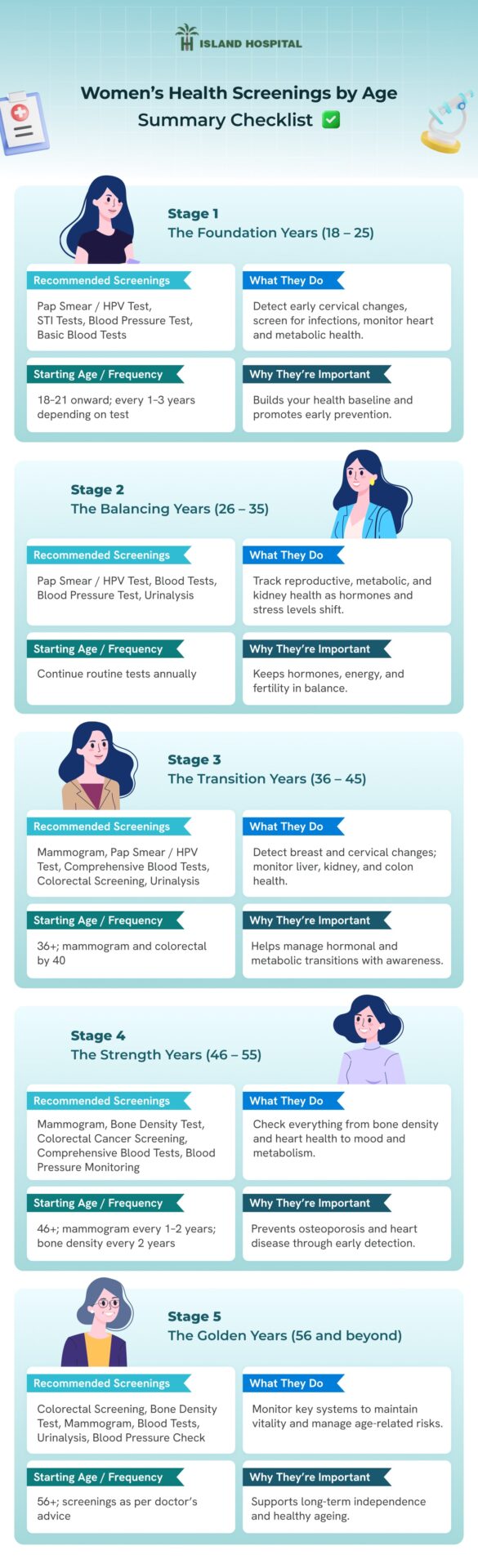
Stage 1: The Foundation Years (Ages 18–25)
Your 20s are all about building the foundation for lifelong wellness. Even if you feel healthy and energetic, this is the perfect time to establish good screening habits and get to know your body’s normal baseline.
Most women in this stage focus on reproductive health, sexual wellbeing, and early detection of preventable conditions. The goal is simple — to identify any potential issues early and create a solid starting point for the years ahead.
Key screenings to prioritise during this stage include:
- Pap Smear / HPV Test – Detects early cervical cell changes and helps prevent cervical cancer.
- STI Tests – Screens for infections like HIV, syphilis, chlamydia, and gonorrhoea that can affect fertility and reproductive health.
- Blood Pressure Test – Monitors for early signs of hypertension, which can affect women even at a young age.
- Basic Blood Tests – Establish your baseline levels for cholesterol, blood sugar, and thyroid function to track changes over time.
Stage 2: The Balancing Years (Ages 26–35)
This stage of life often brings new challenges, balancing career, family, and personal goals, and your body works just as hard to keep up. Hormonal shifts, fertility considerations, and rising stress levels can all influence your health in subtle ways. Regular screenings help ensure that your energy, hormones, and overall wellness stay in balance.
Key screenings to prioritise during this stage include:
- Pap Smear / HPV Test – Continue regular cervical screenings as advised by your doctor. These tests remain one of the most effective ways to prevent cervical cancer.
- Blood Tests – Include checks for cholesterol, blood sugar, and thyroid function. Hormonal fluctuations, lifestyle stress, and dietary changes can all affect these levels.
- Blood Pressure Test – Regular monitoring helps detect early hypertension, especially if work stress or lack of rest are part of your routine.
- Urinalysis – A simple test that tracks kidney function and hydration health, helping catch early metabolic issues.
Stage 3: The Transition Years (Ages 36–45)
Your late 30s and early 40s mark a time of subtle but important change. Metabolism begins to slow, hormones start to fluctuate, and family history risks often come into sharper focus. This is the stage where regular health screenings become even more valuable, not just for early detection, but for maintaining energy, balance, and long-term vitality.
Key screenings to prioritise during this stage include:
- Mammogram – This is the time to begin regular breast screenings. A mammogram can detect abnormalities long before they can be felt, making early detection of breast cancer far more effective.
- Pap Smear / HPV Test – Continue routine cervical screenings to stay protected against cervical cancer.
- Comprehensive Blood Tests – Expand your routine tests to include liver, kidney, and glucose profiles. These help monitor how your body is adapting to lifestyle changes and ageing.
- Colorectal Cancer Screening – Consider a baseline test, especially if there’s a family history of colon cancer or digestive issues.
- Urinalysis – Helps identify early metabolic or kidney problems that can arise as metabolism shifts.
Stage 4: The Strength Years (Ages 46–55)
This stage marks a major turning point for many women. As the body transitions through perimenopause and menopause, hormonal changes can affect everything from bone density and heart health to mood and metabolism.
It’s also the time when many long-term health risks begin to surface, making consistent screenings more important than ever.
Key screenings to prioritise during this stage include:
- Mammogram – Continue regular breast screenings every one to two years. Early detection remains the most powerful defence against breast cancer.
- Bone Density Test – Check for early signs of osteoporosis. Reduced oestrogen levels during menopause can accelerate bone loss, making preventive care crucial.
- Colorectal Cancer Screening – If you haven’t already, begin routine screenings. Regular follow-ups help identify and remove precancerous growths early.
- Comprehensive Blood Tests – Include hormone, lipid, and glucose levels to monitor how your body is adapting to midlife changes.
- Blood Pressure Monitoring – Keep a close watch, as the risk of hypertension and heart disease increases with age and hormonal shifts.
Stage 5: The Golden Years (Ages 56 and Beyond)
Your golden years are about maintaining vitality and quality of life. With the right health screenings, you can stay active, independent, and confident in your wellbeing. At this stage, regular monitoring helps detect age-related conditions early, allowing for timely treatment and prevention of complications.
Key screenings to prioritise during this stage include:
- Colorectal Cancer Screening – Continue regular colon checks through stool tests or colonoscopy. Early detection remains one of the most effective ways to prevent serious illness.
- Bone Density Test – Regular follow-ups help monitor bone health and reduce the risk of fractures or osteoporosis-related issues.
- Mammogram – Maintain your breast health screenings as advised by your doctor, based on previous results and personal risk factors.
- Comprehensive Blood Tests – Keep track of blood sugar, cholesterol, kidney, liver, and thyroid function to manage chronic conditions effectively.
- Urinalysis and Blood Pressure Checks – Continue monitoring for kidney function, hydration, and cardiovascular health.
Women’s Health Screenings by Age: Summary Checklist
Want to learn more about what happens during a health screening? Our guide to Health Screening at Island Hospital covers everything from preparation to results.
Ready to Start Your Journey to Lifelong Wellness?
Your health journey is uniquely yours and the right screenings help you stay ahead, informed, and in control. By understanding what to check and when, you’re not just preventing illness; you’re investing in a lifetime of wellness and peace of mind.
Whether you’re just starting out or focusing on maintaining your vitality, Island Hospital’s Women’s Health Screening Packages are designed to support every stage of your life. Each package combines advanced diagnostic technology with expert medical care, ensuring that your screenings are thorough, comfortable, and truly personalised.
Take the next step toward lifelong wellbeing — Schedule an appointment today!
Explore Island Hospital’s Comprehensive Screening Package for Women

Women’s health is ever-changing and the best care comes from understanding those changes before they become challenges. At Island Hospital, our Comprehensive Plus Package (Female) is designed to give you a full, personalised overview of your health, helping you detect potential issues early and make confident decisions about your wellbeing.
For RM2,799, you’ll receive a detailed health screening that goes beyond the basics — combining advanced diagnostics, a thorough physical examination, and a personalised consultation to help you stay ahead of your health.
What’s Included in Your Screening Experience:
- Physical examination and consultation by a Health Screening Physician
- Comprehensive blood and urine tests
- Cancer marker screening (AFP, CEA, CA 19-9, CA125, and EBV markers)
- Liquid-based Pap Smear with HPV genotyping (for individuals below 60)
- Ultrasound of the abdomen and pelvis
- Mammogram or breast ultrasound
- ECG and cardiac stress test
- Diabetes, thyroid, liver, kidney, and cholesterol screening
Take a proactive approach to your health — this screening package helps detect potential issues early, so you can manage your well-being before they become serious.
FAQ
How often should I do blood tests if I feel fine?
Even if you feel healthy, it’s recommended to get basic blood tests once every one to two years. These tests check your cholesterol, blood sugar, and organ function, often detecting early changes before symptoms appear.
If you have underlying conditions or a family history of certain diseases, your doctor may suggest more frequent testing.
Are hormone tests necessary during menopause?
Hormone tests aren’t always required for diagnosing menopause, since symptoms like irregular periods, hot flashes, and mood changes are often clear indicators. However, your doctor may recommend testing if symptoms are severe, start earlier than expected, or if you’re considering hormone replacement therapy (HRT).
Can I skip colon screening if I have no family history?
Even without a family history, colorectal screening is still important. Most cases of colon cancer occur in people without known risk factors. Regular screening, typically starting at age 45 to 50 helps detect precancerous changes early, when treatment is most effective.
What lifestyle habits make screenings more effective?
Healthy habits enhance the accuracy and benefits of your screenings. Maintain a balanced diet, stay hydrated, get enough sleep, exercise regularly, and avoid alcohol or caffeine before certain tests. Most importantly, follow your doctor’s preparation instructions for each screening.
How can I prepare for a health screening?
Most screenings require fasting (6–10 hours before your appointment). Avoid heavy exercise, alcohol, or caffeine the day before. Wear comfortable clothing, bring your medical records, and list any medications you’re taking to help your doctor interpret results accurately.
What if my screening results are abnormal?
Don’t panic — an abnormal result doesn’t always mean something serious. Your doctor will likely recommend follow-up tests to confirm the findings. Early detection gives you more options and better outcomes, so staying proactive is key.
Related Doctors
Latest Blog Posts

February 18, 2026

February 11, 2026