
03 Oct The 4 Benefits of Early Detection and Treatment for Crossed Eyes in Children
The 4 Benefits of Early Detection and Treatment for Crossed Eyes in Children
By Island Hospital | 3 October 2026. 10:00:00 AM
If you notice your child’s eye drifting during daydreaming or a persistent “crossed” appearance while playing, it’s worth paying attention.
It can be easy to assume it’s just a temporary phase, but there’s an important fact every parent should know: children typically do not simply outgrow crossed eyes on their own.
This condition is medically known as strabismus, and it affects about 4% of children.
The encouraging news is that with early diagnosis and timely treatment, most children can achieve well-aligned vision and healthy visual development.
Let’s take a closer look at the available treatment options and how they can help correct strabismus and support your child’s long-term vision health.
What Are Crossed Eyes in Children?
Crossed eyes, or strabismus, happen when the eyes do not align properly and point in different directions. For the brain to see a single 3D image, both eyes must point at the same spot simultaneously.
When they don’t, the brain receives two different pictures, leading to confusion and, eventually, the “shutting off” of one eye’s signal.
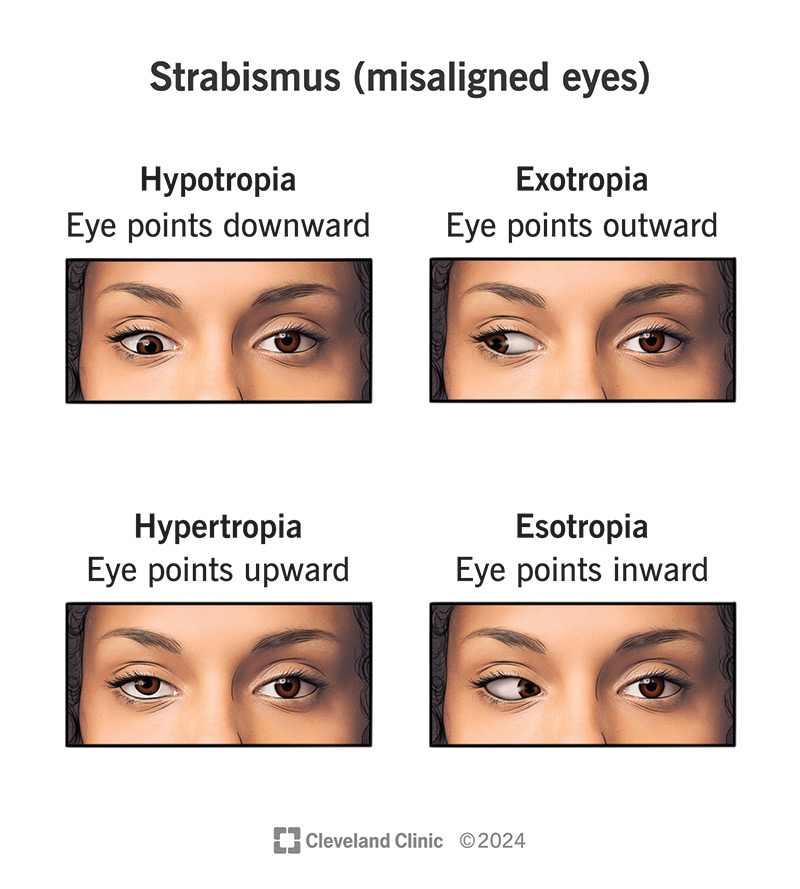
The Four Directions of Strabismus
Doctors classify the condition based on which way the eye turns:
- Esotropia: Inward toward the nose (the most common type).
- Exotropia: Outward toward the ear.
- Hypertropia: Upward toward the eyebrow.
- Hypotropia: Downward toward the cheek.
The misalignment may:
- Happen all the time
- Come and go intermittently
- Affect the same eye consistently
- Alternate between both eyes
Normally, the eyes work together to focus on the same object and send a single image to the brain. In strabismus, the brain receives two different images, which can disrupt normal vision development.
The Causes of Crossed Eyes in Children
Although many cases are simply due to a child’s focusing system working too hard to compensate for farsightedness (Accommodative Esotropia), others are linked to more complex roots such as:
- Neuromuscular Issues
Conditions like Duane Syndrome or Brown Syndrome involve miswired nerves that limit the eye’s range of motion. - Systemic Risk Factors
Children with Down syndrome, Cerebral Palsy, or those born prematurely are at a higher risk of developing this condition. - Hidden Triggers
Many parents notice an intermittent turn, one that only appears when the child is fatigued, ill, or staring into bright sunlight. - Refractive errors
Uncorrected vision problems, especially farsightedness (hyperopia) can cause the eyes to over-focus in an attempt to see clearly. Over time, this extra focusing effort may cause one or both eyes to turn inward. - Genetics
Strabismus often runs in families. A child with a parent or sibling who has crossed eyes or other eye alignment problems may have a higher risk of developing the condition.
What are the Early Signs of Crossed Eyes Parents Often Miss?
Strabismus is not always obvious. Some subtle signs include:
- Tilting or turning the head to focus
- Covering one eye in bright sunlight
- Squinting frequently
- Difficulty judging distance (clumsiness, bumping into objects)
- One eye drifting when tired or daydreaming
- Poor depth perception in activities like catching a ball
Older children may also report symptoms such as eye strain, headaches, blurred vision, or double vision, especially after reading or focusing for long periods.
Note on Pseudostrabismus
Many infants appear cross-eyed because of a wide nasal bridge or extra skin folds (epicanthal folds). This is a “false” turn. A specialist uses a light reflex test to confirm if the eyes are truly misaligned or if it is just a facial structure illusion.
Is It Always a Problem? Normal vs Abnormal Eye Misalignment
Many parents worry the moment they notice their baby’s eyes crossing. However, occasional eye drifting can be normal during early infancy.
1. When Eye Crossing May Be Normal
Newborns and very young infants are still developing eye muscle control. Mild intermittent crossing may occur during the first few months of life, especially when babies are tired or focusing on nearby objects.
In many cases, this improves naturally by around 3 to 4 months of age.
2. When Parents Should Be Concerned
As parents, you should take note and schedule an eye examination if you notice:
This is because persistent eye misalignment rarely improves on its own and, without early evaluation and treatment, may affect your child’s vision development and depth perception.
Don’t let misinformation affect your vision. Learn the truth about eye health in our latest feature: The 5 Most Common Myths Surrounding Glaucoma.
How Do Doctors Diagnose Crossed Eyes
If you suspect your child has a visual misalignment, the first step is a comprehensive exam with a Paediatric Ophthalmologist or a Developmental Optometrist.
Unlike a standard school screening, a clinical diagnosis is thorough, non-invasive, and designed to be stress-free for your child.
Common Diagnostic Tests
During the appointment, a specialist will use several specialised techniques to evaluate how the eyes work together:
- The Cover or Uncover Test:
The doctor covers one eye at a time while the child focuses on a target. This reveals how the eyes shift and helps determine the type and severity of the misalignment. - Corneal Light Reflex:
By shining a small light into the eyes, the doctor checks if the reflection lands in the same spot on both pupils. - Visual Acuity (Clarity):
Testing each eye individually ensures that strabismus hasn’t led to Amblyopia (lazy eye), where the brain begins to “ignore” the signal from the weaker eye. - Refraction & Dilation:
These tests determine if a prescription for glasses is needed. Often, correcting farsightedness can significantly reduce or even eliminate the “eye turn.” - Stereopsis Testing:
Using specialised 3D images (like “the butterfly test”), the doctor measures your child’s depth perception.
Note for Parents:
Not all eye exams are the same.
Before you book an appointment, make sure you know what to look for in a specialist. Read 3 Ways to Confidently Select the Right Eye Doctor to help you make an informed decision for your family.
Why Early Intervention Matters
The goal of early treatment is to take advantage of neuroplasticity. Between birth and age eight, a child’s brain is actively learning how to process visual signals.
Addressing strabismus during this window ensures the brain builds a strong connection to both eyes.
The Key Advantages of Early Treatment
- Development of 3D Vision
Healthy vision requires both eyes to work as a team to create a 3D view of the world (Stereopsis).This is essential for sports, driving, and many specialised careers. If left untreated, strabismus leads to “flat” vision.The condition makes it difficult to judge distances, leading to chronic clumsiness, difficulty catching objects, and safety risks when navigating stairs or uneven terrain. - Preventing Permanent Vision Loss
This is the most significant risk. When eyes are misaligned, the brain receives two conflicting images. To avoid double vision, the brain eventually “shuts off” the signal from the drifting eye.Early care prevents Amblyopia (lazy eye). If the brain learns to ignore a misaligned eye for too long, that vision loss can become permanent. - Improved Academic Focus
Children with untreated strabismus must work twice as hard to focus. This constant strain often leads to physical symptoms that interfere with school.This results in frequent headaches, eye strain, and “jumping text” which can cause a child to avoid reading and near-work entirely.These children are often misidentified as having learning disabilities or behavioral issues when the root cause is actually untreated eye misalignment. - Social Confidence
Correcting the physical alignment early helps children maintain eye contact, preventing potential self-esteem issues or social anxiety as they grow older.
Recommended Screening Timeline
| Age Range | Goal |
|---|---|
| 6–12 Months | Initial Screening: Check for congenital issues or high refractive errors. |
| 3 Years Old | Functional Check: Ensure eyes are teaming correctly before starting school. |
| Before Age 7 | The Critical Window: This is the most effective time for therapy or patching while the brain is still adaptable. |
Treatment Options for Crossed Eyes
To determine the best path forward, a paediatric ophthalmologist will check your child’s eye’s focusing power. Because every child’s neurological and muscular makeup is different, treatment is rarely “one size fits all.”
Non-Surgical Solutions
In many cases, the first line of defense involves non-invasive methods to retrain the eyes and brain.
- Corrective Lenses:
For many children, the “turn” is caused by extreme farsightedness. High-quality glasses can remove the intense focusing strain, allowing the eyes to realign naturally without further intervention. - Vision Therapy:
Think of this as physical therapy for the brain and eyes. Through a customised program of visual tracking and “pencil push-ups,” children can strengthen the neurological connection between their eyes to improve teamwork. - Patching (Occlusion Therapy):
It is a common myth that patching straightens an eye. In reality, patching treats the brain, not the muscle. It forces the brain to acknowledge signals from the “weaker” eye to prevent permanent vision loss (Amblyopia), though the physical drift may still remain.
Surgical Intervention
When glasses or therapy cannot fully resolve the misalignment, surgery becomes the “gold standard” for correcting the physical position of the eyes.
This is a common, outpatient procedure where the surgeon adjusts the tension of the eye muscles:
| Procedure | Action | Goal |
|---|---|---|
| Recession | Moving a muscle backward on the eye. | Weakens a muscle that is pulling too hard. |
| Resection | Shortening a muscle by removing a small section. | Strengthens a muscle that is too loose. |
A 5-Step Action Plan for Parents After the Diagnosis
Receiving a diagnosis of strabismus can feel overwhelming, but it is the first step toward protecting your child’s vision.
Here is how to navigate the weeks and months ahead:
1. Commit to the Clinical Plan
Whether it’s a specific patching schedule (e.g., 2 hours every afternoon) or wearing corrective lenses full-time, follow the prescription exactly.
Consistency is the engine of improvement. Skipping even a few days can stall progress in retraining the brain.
2. Build a Positive Reinforcement System
Many children resist glasses or patches at first. For the first 2 weeks, use “high-value” rewards like extra reading time or a sticker chart specifically for when they are wearing their patch.
Make the treatment part of a fun routine rather than a chore.
3. Schedule Your Follow-Ups
Strabismus care is rarely a “one-and-done” fix. Mark your calendar for follow-up exams.
These visits allow the ophthalmologist to measure the degree of “drift” and adjust the plan as your child’s eyes grow and change.
4. Monitor for ‘Visual Fatigue’
Keep a daily log of any changes in your child’s eyes. If you notice increased squinting, headaches, or your child closing one eye to see better, report this to your specialist.
These are often signs that a prescription adjustment or a change in therapy is needed.
5. Practice Patient Advocacy
Communicate the diagnosis to your child’s teachers or caregivers. Ensuring they understand the patching schedule or the need for front-row seating can make a massive difference in your child’s academic success and comfort.
Your Observation is the First Line of Defense
As a parent, you are the most frequent observer of your child’s visual habits. If you notice a subtle drift when they are exhausted or a slight squint in the midday sun, don’t wait for them to “grow out of it.”
Island Hospital offers a specialised environment where paediatric eye health is treated with both precision and heart.
Whether it’s a routine check for pseudostrabismus or complex surgical coordination, we focus on restoring your child’s binocular vision and 3D depth perception.
Secure your child’s visual future and get the expert answers you deserve.
Schedule an evaluation with our pediatric ophthalmology team today.
FAQs
How can I tell the difference between “False” and “True” Strabismus?
While Pseudostrabismus is harmless, it can look identical to true Strabismus to the untrained eye. One quick way to check at home is the Light Reflex Test:
- Shine a small flashlight toward your child’s eyes from about two feet away.
- Look at the reflection of the light in their pupils.
- In Pseudostrabismus, the light reflection will be in the exact same spot on both pupils.
- In True Strabismus, the reflection will be centered in one eye but off-center in the other.
How does crossed eyes affect vision and brain development?
Aside from being a cosmetic issue, strabismus can affect how the brain processes vision.
When the eyes send two different images:
- The brain may ignore one eye’s input (a process called suppression)
- This can lead to amblyopia (lazy eye)
- Depth perception may not fully develop
The human brain is most adaptable in early childhood. However, if untreated during this period, vision development of your child may be permanently affected by this condition.
What are the hidden impacts of my child having strabismus?
Beyond the physical turn, strabismus creates “content gaps” in your child’s daily life that are often overlooked:
- Reading Fatigue
Children may lose their place constantly or see “jumping” letters, often being misdiagnosed with learning disabilities while reading.They may also frequently rub their eyes or complain of headaches after homework.Because these symptoms mimic focus issues, children with untreated strabismus are sometimes misdiagnosed with learning disabilities when the root cause is actually a visual misalignment.
- Depth Perception (Stereopsis)
Without two aligned eyes, tasks like catching a ball or navigating stairs become significantly harder. It is often linked with clumsiness or frequent tripping. - Social-Emotional Toll
As children reach school age, the social-emotional toll becomes more pronounced. Because the child may be unable to maintain steady eye contact, they may feel self-conscious during social interactions.This can lead to self-esteem issues, social anxiety, and misunderstanding by peers.
How long does it take to see results from strabismus treatment?
The timeline varies significantly based on the child’s age and the severity of the misalignment.
- Mild cases
Some children show noticeable improvement within 3 to 6 months simply by wearing the correct prescription glasses or following a consistent patching schedule. - Moderate to severe cases
Treatment is often a multi-year process. It may involve several phases, such as starting with glasses, moving to patching, and potentially finishing with surgery or vision therapy.
Can crossed eyes be prevented?
Not all cases of strabismus can be prevented, especially when genetics are involved. However, early detection can reduce the risk of complications.
Helpful Preventive Steps
- Attend routine pediatric vision screenings
- Watch for unusual eye movements
- Seek evaluation early if concerns arise
- Ensure children wear prescribed glasses consistently
Related Doctors
Latest Blog Posts
October 24, 2026

October 22, 2026
October 20, 2026