
15 May 6 Symptoms to Look Out for in Cervical Cancer
6 Symptoms to Look Out for in Cervical Cancer
By Island Hospital | May 15, 2026 5:09:56 PM
In Malaysia, cervical cancer is second only to breast cancer in prevalence and in regions without routine screening, it remains a leading cause of death.
But these statistics don’t have to be the reality.
Because cervical cancer develops slowly, there is a vital window of opportunity for prevention.
But how does it start, and what steps can you take today to ensure you’re safe? We’re answering your most pressing questions about screenings, risks, and lifesaving prevention.
What is Cervical Cancer?
As the name suggests, cervical cancer is cancer that starts in the cervix, which is what connects the uterus (womb) to the vagina. It also helps to keep babies inside the womb until the baby is due.
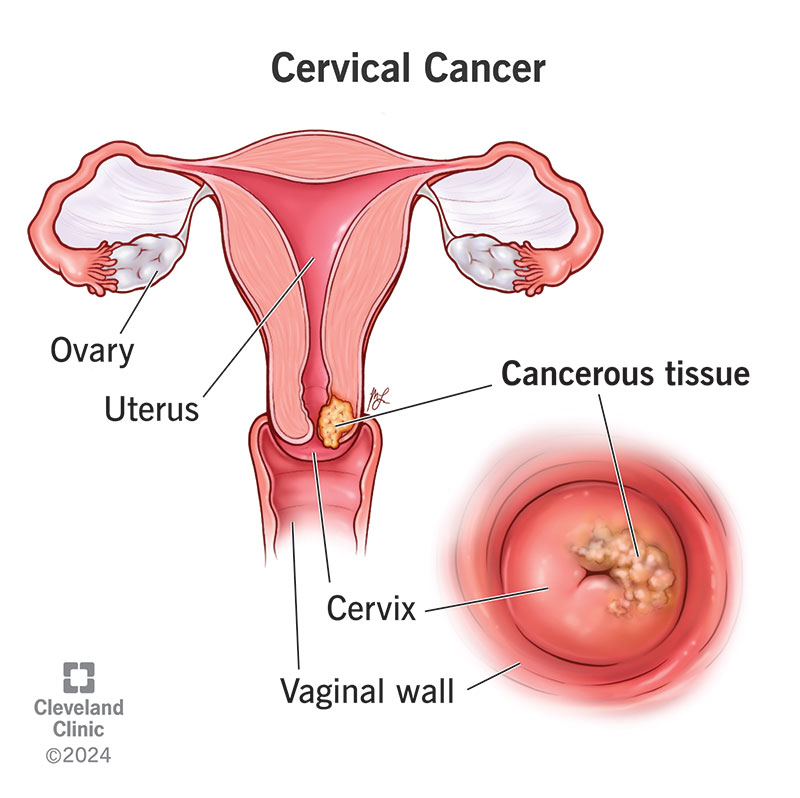
There are two different types of cells in the cervix; the squamous cells form the surface of the cervix wall while the glandular cells are the deeper parts of the wall.
Most forms of cervical cancer begin at the surface (squamous cells), although there are cases where the cancer cells are difficult to detect because they form in a deeper area (glandular cells).
The 4 Stages of Cervical Cancer
Once diagnosed, doctors determine the “stage” to describe the extent of the disease:
- Stage I: The cancer is strictly confined to the cervix. It has not spread to nearby lymph nodes or distant sites.
- Stage II: The cancer has grown beyond the cervix and uterus, perhaps into the upper part of the vagina or the tissue next to the cervix, but it has not reached the pelvic wall or the lower third of the vagina.
- Stage III: The cancer has spread to the lower part of the vagina and/or the pelvic wall. It may also cause kidney problems by blocking the tubes that carry urine.
- Stage IV: This is advanced cancer. It has spread to nearby organs like the bladder or rectum (Stage IVA), or to distant parts of the body like the lungs or bones (Stage IVB).
What Causes Cervical Cancer?
Approximately 90% of all cervical cancer cases are caused by the human papillomavirus (HPV). This virus is a sexually transmitted virus and comes in many different types.
Do not panic if you’re told that you have an HPV infection, as not every type of HPV causes cancer.
In fact, most HPV infections will usually go away without treatment; but there is a small percentage of HPV infections that can develop into cancer.
HPV can also be transmitted by means other than sexual intercourse. Some of the non-sexual ways HPV can be transmitted are:
- From mother to child (rare)
- Very close physical contact
Some studies also find that smoking, a weakened immune system (as a result of a different disease), having other sexually transmitted infections (STIs) or early sexual activity may contribute to an increased risk of cervical cancer.
Fun fact
There are more than 100 types of the human papillomavirus (HPV), but only 20 are classified as high-risk types. Approximately 70% of all cervical cancers are caused by two types of HPV, the HPV-16 and HPV-18.
Symptoms of Cervical Cancer
Like most other cancers, early-stage cervical cancer produces little to no symptoms.
When symptoms begin to develop, it is potentially more advanced and a visit to the doctor is highly recommended. Some of the signs and symptoms of advanced cervical cancer include:
- Vaginal bleeding after intercourse, between periods or after menopause
- Pelvic pain during intercourse
- Watery, bloody discharge from the vagina that is heavy and has a foul smell
- Bleeding from the rectum or bladder
- Dull backache or pain in one side of the legs
- Fatigue or loss in appetite
If you are experiencing or have experienced any of the above, you should be immediately evaluated by a gynaecologist.
Cervical Intraepithelial Neoplasia (CIN)
During a pap smear test, your doctor may mention the term CIN, which is short for cervical intraepithelial neoplasia.
CIN is what you can call a pre-cancerous condition. Cancer usually develops when the cells in an area undergo mutation and don’t stop multiplying or spreading.
CIN can be considered the stage where abnormal cells grow on the surface of the cervix, but has not invaded beyond the base of the lining.
CIN is caused by HPV, and just like an HPV infection, most people with CIN do not necessarily develop cervical cancer. Cervical cancer that develops from CIN takes years to develop, meaning there is plenty of time to find and remove problematic cells.
This condition is also split into grades, from a grade of 1 to 3.
A more advanced stage of CIN usually means that a large portion of the cervix surface wall has been affected by the abnormal cell change.
Timeline of HPV infection
When an HPV infection starts, there are two outcomes:
- The infection is cleared by the body’s immune system
- The infection is persistent (remains in the body)
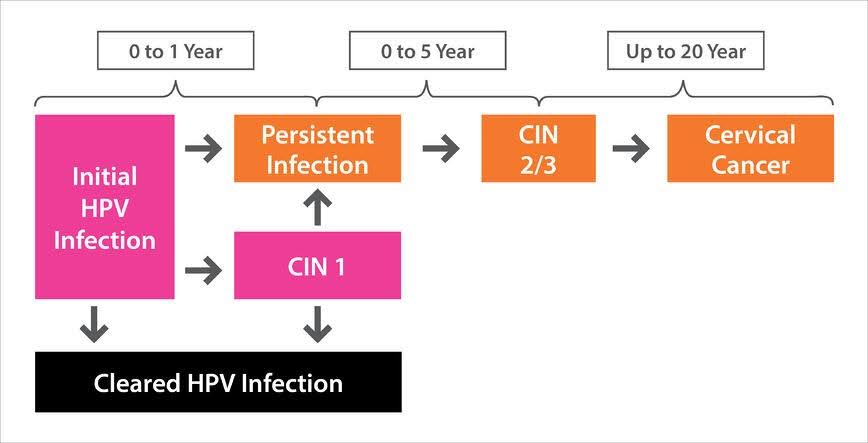
A persistent infection will eventually develop into CIN 2, and if left untreated; develop into cervical cancer.
It takes up to 15 years for cervical cancer to develop in someone, but that number can be reduced to 5 years if you have a weakened immune system.
So, between the start of an infection until you develop cervical cancer, a healthy person has up to 15 years to detect and receive treatment for HPV infection, CIN, or cervical cancer.
Proactive protection is key to a cancer-free future. Learn how the HPV vaccine serves as your strongest defense against high-risk viruses, offering a simple way to reduce your risk before symptoms ever appear.
Screenings for Cervical Cancer
There are two screening tests that are used to screen for cervical cancer:
Pap Smear Test
During a pap smear, the doctor will scrape cells from the cervix to be tested for any abnormal cells. If abnormalities are found, you will be called back for repeated testing or follow-ups.
Unlike some forms of cancer screening, a pap smear can detect abnormal cells even before the cancer starts to develop.
HPV Test
A HPV test is also carried out in the same way as a pap smear. It can be done by collecting a separate sample from the pap smear, or by using the same sample as the pap smear.
If you are getting a HPV test done, then it is usually also performed at the same time as your pap smear. Unlike a pap smear, this test does not detect cancer cells, but only the presence of HPV.
Most guidelines will recommend for you to get your first pap smear done at the age of 21 if you are sexually active. If there are no abnormalities, our doctors may tell you to wait for 3 years until your next pap smear.
Even if the results of your pap smear are normal for the first few years, it is still recommended to screen for cancer regularly as some cancer cells take years to develop.
Individuals At Risk of HPV & Cervical Cancer
The more partners a woman has, the greater the chance of her being infected with HPV. However, studies show that even women who have only one partner have a 10% chance of getting a HPV infection.
Some of the risk factors for a HPV infection are:
- Women who are sexually active
- Women who have (or had) more than one partner
- Women whose partner(s) have had more than one partner
- Women who have a weakened immune system
- Women who started having sex at an early age (before the age of 18)
A woman’s risk may also change according to circumstance (growing older and lifestyle changes) or if they change partners.
Just because your risk is low before or now, does not mean it will remain the same in the future. Regular follow-ups or screening are always recommended so changes can be detected early.
Cervical Cancer Prevention
Individuals who engage in early sexual activity and smoking are some factors that can increase your risk of cervical cancer. The longer a person waits before having sex, the fewer partners they are likely to have and thus their risk of transmitting HPV is lower.
It is important to be transparent and also try to understand your partner’s sexual activities or history, so you can both take steps to prevent or treat HPV infections.
Alongside this, it is essential to maintain a healthy diet and lifestyle, so that your immune system can fight off and prevent any HPV infection from developing into cancer.
Most importantly, get screened regularly and get a HPV vaccine when possible as regular screening can detect abnormal cells before they develop into cancer, and a HPV vaccine can help your body fight off infections.
HPV vaccines should be taken before any sexual activity. That is why in Malaysia, school girls are vaccinated at the age of 13 years old.
It is best (if you have not been vaccinated) to get vaccinated as soon as possible. Men and boys can also benefit from vaccination as there are HPV serotypes that can cause cancer in males as well.

For individuals looking to take a comprehensive approach to their wellbeing, the Comprehensive Plus Package (Female) at Island Hospital offers an extensive health screening designed for peace of mind.
Along with vital checks for heart health, bone density, and organ function, it includes a liquid-based cytology (Pap Smear) to ensure you stay ahead of any cervical health concerns.
Treatments for Cervical Cancer
Surgery
Cervical cancer is treatable when detected early, and best while it is still in the pre-cancerous stage. Some of the treatment options are:
- Cone biopsy
A small operation that removes the tissue of the cervix in the shape of a cone. While this method is used to gather tissue samples, it can also be used to treat and remove abnormal cells.
The cells in the cervix will heal and re-grow after a month. - Hysterectomy (surgery to remove the cervix and uterus)
A majority of early cervical cancers are treated using this method, which will remove both the cervix and uterus along with a portion of the nearby lymph nodes.
Radiation or Radiotherapy
Radiotherapy is treatment for cervical cancer beyond the first stage and is often combined with chemotherapy for more advanced cervical cancers.
However, this treatment causes menopause to occur earlier.
3 Common Questions & Concerns on HPV and Cervical Cancer
1. Can I still get pregnant after cervical cancer treatment?
The impact on fertility depends largely on the stage of diagnosis and the type of treatment required:
- Pre-cancerous Stage: If the condition is caught early and treated with minor surgery (such as a LEEP or cone biopsy), pregnancy is usually still possible.
- Radiotherapy: Unfortunately, radiotherapy to the pelvic area causes infertility.
- Preserving Your Future: If you wish to have children after treatment, it is vital to discuss fertility preservation (such as egg freezing) or other options with your oncologist or consultant gynaecologist before your treatment begins.
2. Why is regular, repeated screening so important?
A single clear test is a great start, but it isn’t a lifetime guarantee. Regular screening is necessary because:
- New Changes: Abnormal cells can develop at any time between tests.
- Slow Progression: Some cellular changes take years to become detectable; repeated tests increase the window of opportunity to catch them.
- Shifting Risk Factors: Changes in your health, immune system, or lifestyle can alter your risk profile over time.
- Higher Accuracy: Ongoing testing significantly improves the chances of identifying and treating infections before they escalate.
3. Does Island Hospital offer the HPV vaccine?
Yes. We provide comprehensive HPV vaccination services as part of our commitment to women’s health.
Protecting yourself is simple:
- Consultation: Schedule an appointment with any of our consultant gynaecologists.
- Expert Care: Our specialists will guide you on the best vaccination schedule for your age and health history.
Regular screenings are the foundation of long-term health. For a comprehensive look at your well-being, check out Island Hospital’s 8 Essential Health Screenings for Women to ensure you’re protected at every stage of life.
Your Health is Your Power
Cervical cancer is a formidable opponent, but with modern medicine, it is one you can get ahead of. Between the protection of the HPV vaccine and the precision of routine screenings, you have the tools to ensure a healthy future.
With Island Hospital, our gynaecologist and oncologist departments do not leave your wellness by chance.
Whether you are due for a check-up or looking to start your vaccination journey, our specialists are here to support you.
FAQs
If I have received the HPV vaccine, do I still need screening?
Yes, screening is still necessary even after vaccination. While the HPV vaccine protects against the most common high-risk strains, it doesn’t cover all types of HPV that may cause cervical cancer.
Regular check-ups ensure any abnormalities are caught early.
Can cervical cancer affect younger women?
While it is more commonly diagnosed in women over 30, cervical cancer can still affect younger women, especially if they haven’t been vaccinated or screened. Early awareness and preventive care play a key role in reducing risk at any age.
Is cervical cancer curable if caught early?
Yes, early-stage cervical cancer is highly treatable and often curable. When detected early through screening, treatment options such as minor procedures or surgery can be very effective.
This is why early detection plays a critical role in improving survival rates.
What increases your risk of cervical cancer?
The biggest risk factor for cervical cancer is long-term infection with high-risk human papillomavirus (HPV).
Other contributing factors include smoking, a weakened immune system, early sexual activity, multiple partners, and skipping regular cervical cancer screening.
Do I still need a Pap smear after getting the HPV vaccine?
Yes, even if you’ve received the HPV vaccine, regular Pap smear tests are still essential.
The vaccine protects against the most common high-risk HPV types, but not all. Continued screening ensures any abnormal cervical changes are identified early.