


29 Oct Hand, Foot, and Mouth Disease in Malaysia: What Parents Need To Know and How To Keep Our Children Safe
Hand, Foot, and Mouth Disease in Malaysia: What Parents Need To Know and How To Keep Our Children Safe
By Island Hospital | 29 October 2026. 10:00:00 AM
Hand, Foot, and Mouth Disease (HFMD) is a common viral illness that primarily affects infants and young children. While most cases are mild and resolve on their own, the condition can be distressing for both children and parents due to fever, painful mouth ulcers, and skin rashes.
In 2025, Malaysia recorded more than 268,000 HFMD cases, a 231% increase from 2024, highlighting the importance of early symptom recognition, good hygiene practices, and prompt medical attention when needed.
One of the biggest concerns parents have is understanding what to expect after their child develops HFMD. How long will symptoms last? When should they see a doctor? When can their child return to school?
This guide explains the symptoms, stages, recovery timeline, treatment options, warning signs, and preventive measures to help parents navigate HFMD with confidence.
Causes of HFMD
HFMD is a contagious viral infection most commonly caused by Coxsackievirus A16 and Enterovirus 71 (EV71).
The disease primarily affects:
- Infants
- Toddlers
- Preschool children
- Children under 5 years old
However, older children and adults can also become infected.
Transmission of HFMD
- Respiratory droplets from coughing or sneezing
- Saliva
- Fluid from blisters
- Contact with contaminated surfaces
- Stool from infected individuals
Because it spreads rapidly in close-contact settings, outbreaks frequently occur in childcare centres, kindergartens, and schools.
What Are the First Signs of HFMD?
The earliest symptoms of HFMD often resemble a common viral infection.
Common early signs include:
- Mild fever
- Sore throat
- Fatigue
- Irritability
- Reduced appetite
- General feeling of being unwell
These symptoms usually appear 3 to 6 days after exposure to the virus.
Within a few days, more distinctive symptoms begin to develop.
HFMD Symptoms: What Does It Look Like?
1) Painful Mouth Ulcers
One of the hallmark signs of HFMD is the development of painful sores inside the mouth.
These ulcers commonly appear on:
- The tongue
- Gums
- Inside the cheeks
- Roof of the mouth
- Back of the throat
The ulcers may start as small red spots before becoming painful blisters or open sores.
Because swallowing can become painful, children may refuse food and fluids.
2) Skin Rash on Hands and Feet
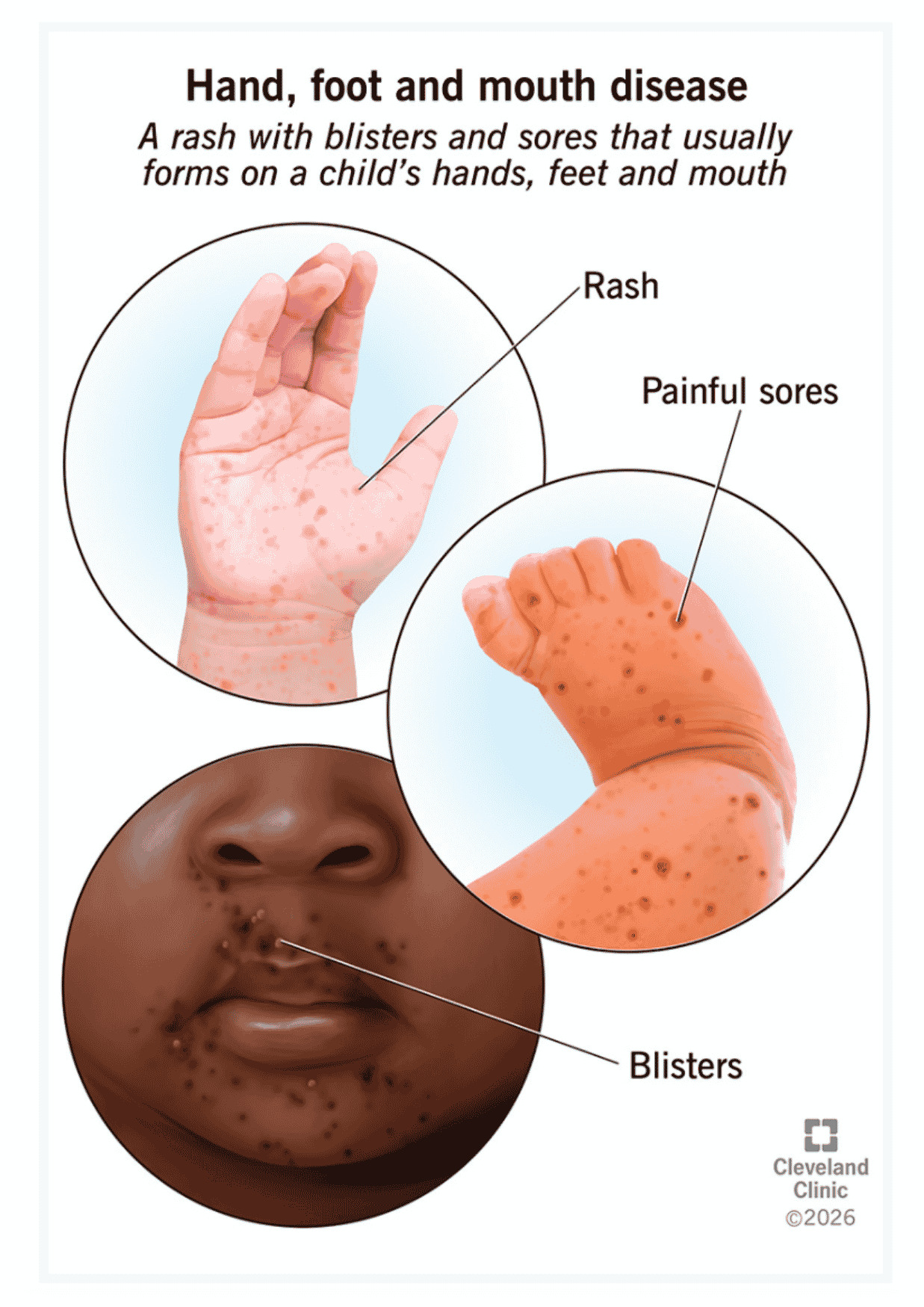
Another characteristic symptom is a rash that develops on:
- Palms of the hands
- Soles of the feet
- Fingers and toes
The rash may appear as:
- Flat red spots
- Small blisters
- Fluid-filled lesions
The rash is usually not itchy but may be uncomfortable.
3) Rash on Other Parts of the Body
Some children may also develop rashes on:
- Buttocks
- Legs
- Arms
- Around the mouth
The appearance and severity of the rash can vary between individuals.
4) Additional Symptoms
Other symptoms may include:
- Fever
- Sore throat
- Headache
- Reduced appetite
- Fatigue
- Irritability
- Excessive drooling in young children
HFMD vs Chickenpox, Measles, and Other Childhood Rashes
Because many childhood illnesses cause rashes, parents may find it difficult to tell them apart.
| Condition | Rash Location | Mouth Ulcers | Fever |
|---|---|---|---|
HFMD | Hands, feet, buttocks | Yes | Usually mild |
Chickenpox | Face and body | Rare | Common |
Measles | Starts on the face, spreads downward | No | High fever |
If there is uncertainty, consult a healthcare professional for proper evaluation and to provide an accurate diagnosis.
HFMD Day-by-Day Recovery Timeline
One of the most common questions parents ask is, “How long does HFMD last?”
Although every child is different, most cases follow a predictable pattern.
Day 1–2: Fever and Early Symptoms
HFMD often begins with:
- Mild to moderate fever
- Sore throat
- Fatigue
- Irritability
- Reduced appetite
At this stage, parents may mistake HFMD for a common cold or flu.
Day 2–3: Mouth Ulcers Appear
Painful mouth sores begin to develop.
Children may:
- Refuse food
- Cry when eating
- Drink less than usual
- Become more irritable
Maintaining hydration becomes especially important during this stage.
Day 3–5: Rash Develops
The characteristic rash usually appears on the hands and feet.
During this period:
- Fever may continue
- Mouth ulcers remain painful
- Rash becomes more noticeable
This is often the peak of the illness.
Day 5–7: Symptoms Begin to Improve
Most children start feeling better.
You may notice:
- Fever subsiding
- Improved appetite
- Increased energy
- Healing mouth ulcers
Day 7–10: Recovery Phase
For most children:
- Rash fades
- Mouth sores heal
- Normal activities resume
Complete recovery usually occurs within 7 to 10 days.
Is My Child’s HFMD Mild or Severe?
Most cases of HFMD are mild, but some children may require medical attention.
| Symptom | Mild HFMD | Severe HFMD |
|---|---|---|
Fever | Low-grade | Persistent high fever |
Eating | Mild discomfort | Refuses food and fluids |
Activity | Slightly tired | Lethargic or difficult to wake |
Hydration | Drinking adequately | Signs of dehydration |
Rash | Limited areas | Extensive rash |
Parents should monitor symptoms closely, especially in younger children.
When Should You Seek Medical Attention?
Although HFMD is usually mild, medical evaluation is recommended if your child:
- Refuses to drink fluids
- Has difficulty swallowing
- Shows signs of dehydration
- Develops a fever lasting more than three days
- Appears unusually sleepy
- Experiences persistent vomiting
- Has worsening symptoms
If your child is experiencing any of the above symptoms, do contact your child’s Paediatrician. Early assessment can help prevent complications.
Warning Signs That Require Immediate Medical Care
Seek urgent medical attention if your child experiences:
- Severe dehydration
- Difficulty breathing
- Seizures
- Confusion
- Extreme lethargy
- Persistent high fever
- Rapid deterioration in condition
These symptoms are uncommon but require prompt medical evaluation.
Treatment for HFMD
There is currently no specific antiviral treatment for HFMD.
Treatment focuses on relieving symptoms and supporting recovery.
Home Care Measures
Parents can help by:
- Encouraging plenty of fluids
- Providing adequate rest
- Offering soft foods
- Managing fever as advised by a healthcare provider
- Monitoring hydration status
Most children recover fully without complications.
Supporting Your Child Through HFMD
Hand, Foot and Mouth Disease is a common childhood illness that usually resolves on its own within one to two weeks. Understanding the symptoms, stages, and recovery timeline can help parents manage the condition more confidently.
While most children recover with rest, hydration, and supportive care, it is important to watch for warning signs such as dehydration, persistent high fever, or unusual drowsiness.
If you are concerned about your child’s symptoms or recovery, consult our esteemed and experienced Paediatricians for advice and appropriate medical care.
FAQs
What Foods Are Best During HFMD?
Painful mouth ulcers can make eating difficult.
Recommended Foods
Choose soft, soothing foods such as:
- Porridge
- Yogurt
- Mashed potatoes
- Soup
- Smoothies
- Ice pops
- Custard
Foods to Avoid
Avoid foods that may irritate mouth ulcers, including:
- Spicy foods
- Citrus fruits
- Salty snacks
- Crunchy foods
- Carbonated drinks
Cool foods are often better tolerated than hot foods.
How Long Is HFMD Contagious?
HFMD is most contagious during the first week of illness.
However, the virus can remain in:
- Saliva
- Respiratory secretions
- Stool
for several weeks after symptoms have resolved.
Good hygiene remains important even after recovery.
When Can My Child Return to School or Daycare?
Many parents are eager to know when their child can safely return to normal activities.
Generally, children can return to school or daycare when:
- They are fever-free
- They feel well enough to participate
- Mouth sores have improved
- They can eat and drink normally
Parents should also follow local public health recommendations and school policies.
Can Adults Get Hand, Foot, and Mouth Disease?
Yes. Although HFMD is most common in young children, adults can become infected.
Adults may develop:
- Fever
- Sore throat
- Mouth ulcers
- Rash on hands and feet
In some cases, symptoms may be mild or absent.
Parents and caregivers should practice good hygiene when caring for infected children.
Can HFMD Cause Fingernails or Toenails to Fall Off?
Some children experience a temporary condition called onychomadesis several weeks after recovering from HFMD.
This may cause:
- Fingernails to loosen
- Toenails to shed partially or completely
Although alarming, the nails usually regrow naturally without treatment.
How Can HFMD Be Prevented?
Although it is not always possible to prevent HFMD, the following measures can reduce the risk of infection:
Wash Hands Frequently
Handwashing is one of the most effective ways to prevent transmission.
Clean Frequently Touched Surfaces
Regularly disinfect:
- Toys
- Tables
- Doorknobs
- Shared equipment
Avoid Sharing Personal Items
Do not share:
- Utensils
- Cups
- Towels
Keep Sick Children at Home
Children with symptoms should avoid close contact with others until they recover.
Related Doctors
Latest Blog Posts


October 24, 2026

October 22, 2026