
03 Aug 3 Courageous Integrative Treatments to Fortify Your Cancer Care Plan
3 Courageous Integrative Treatments to Fortify Your Cancer Care Plan
By Island Hospital | 3 August 2026. 10:00:00 AM
Modern medicine is a marvel at treating the tumor, but the person carrying it often faces a different set of challenges. Clinical charts may provide the data but they rarely offer a map for the 168 hours of life that happen outside the hospital walls.
Between the appointments and the lab results, there is a complex landscape of emotional, logistical, and physical realities that deserve just as much care.
True resilience requires an approach that treats more than just a diagnosis.
Here, we move beyond definitions to provide integrative treatments that strengthen your plan and honor the courage required to navigate life between your treatments.
Modern Cancer Treatments
Today, cancer is rarely fought with a single tool. Instead, doctors use a multimodal approach, combining different treatments to attack the disease from multiple angles and improve the chances of success.
1. Localised Cancer Treatments
These methods focus on specific areas of the body where the cancer is physically located.
- Surgery
Often the “first line of defense” for solid tumors. The goal is to physically remove the primary tumor and, in some cases, nearby lymph nodes to prevent further spread. - Radiation Therapy
Uses high-energy beams (like X-rays or protons) to damage the DNA of cancer cells. It is frequently used to shrink a tumor before surgery or to clear any microscopic cells left behind afterward.
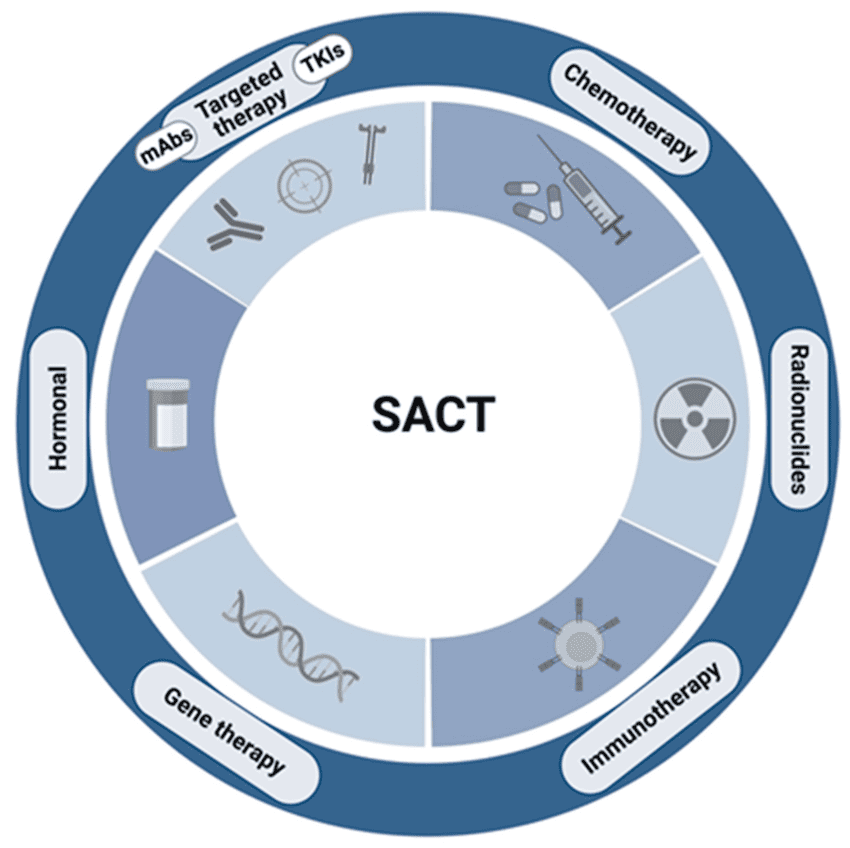
2. Systemic Anti-Cancer Therapy (SACT)
These treatments travel through the bloodstream to reach cancer cells anywhere in the body.
- Chemotherapy
The traditional treatment that kills rapidly dividing cells. While effective, it can affect healthy fast-growing cells (like hair or stomach lining). - Immunotherapy
Instead of attacking the cancer directly, this “trains” your own immune system to recognise and destroy cancer cells that were previously hiding in plain sight. - Targeted Therapy
A more precise approach that uses drugs to block the specific proteins or genetic mutations that tell cancer cells to grow and divide.
3. Antibody-Drug Conjugates (ADCs)
One of the most exciting frontiers in oncology, ADCs represent the next generation of precision medicine.
ADC is like a guided missile:
- The Antibody: Acts as the “GPS,” seeking out specific markers found only on cancer cells.
- The Payload: A potent drug attached to the antibody.
- The Result: The drug is delivered directly into the cancer cell, significantly reducing the “collateral damage” to healthy surrounding tissue.
Summary Table
| Treatment | Primary Goal | Works On |
|---|---|---|
| Surgery | Physical removal | Solid, contained tumors |
| Radiation | Localised cell death | Shrinking masses or cleaning up margins |
| Chemotherapy | Stopping cell division | Widespread or systemic cancer |
| ADCs | Precision delivery | Killing cancer while sparing healthy cells |
Treatment Approaches by Cancer Type
As precision medicine becomes the new standard of care, treatment strategies are increasingly tailored to the specific stage and genetic profile of the disease.
| Cancer Category | Primary Approaches & Examples | 2026 Breakthroughs |
|---|---|---|
| Solid Tumors | Molecularly Guided Therapy Doctors use NGS (Next-Generation Sequencing) to map a tumor's DNA before choosing a drug. | Adjuvant Immunotherapy For lung and HER2+ breast cancer, immunotherapy is now standard after surgery to "mop up" microscopic cells and prevent recurrence. |
| Metastatic Cancers | Immune Checkpoint Inhibitors (ICIs) Drugs like Pembrolizumab "unlock" the immune system to find hidden tumors. | Metastatic melanoma survival has jumped to 35% (from 16%) thanks to ICI combinations. High-dose targeted drugs like Lorlatinib are seeing 7-year success in ALK+ lung cancer. |
| Early-Stage Disease | Precision Maintenance Using low-toxicity drugs to keep patients in remission for years. | mRNA Cancer Vaccines Individualised vaccines (e.g., autogene cevumeran) are showing "lasting results" in pancreatic cancer trials, training T-cells to prevent relapse for up to 6 years. |
Treatments for Blood Cancers & Disorders
Treatments for blood-related cancers (leukemias, lymphomas, and myelomas) have seen some of the most significant transformations, often moving away from traditional chemotherapy.
- CAR T-Cell Therapy
Patients’ own T-cells are engineered to attack cancer cells. While most effective in blood cancers, new 2026 research is exploring its use in solid tumors (like lung and ovarian). - Bispecific Antibodies
These act as “bridges,” simultaneously latching onto a cancer cell and an immune cell to force an interaction. - Targeted Kinase Inhibitors
Drugs like BTK inhibitors have turned conditions like chronic lymphocytic leukemia (CLL) into manageable chronic illnesses with 90%+ survival rates. - Bone Marrow/Stem Cell Transplants
Still a cornerstone for some aggressive leukemias, though targeted therapies are increasingly reducing the need for these intensive procedures.
Chemotherapy and Immunotherapy both fight cancer. But which is the right one for you? Discover the key differences in our guide: Chemotherapy vs. Immunotherapy: Which is Right for You?
What is Prehabilitation and Why Should You Start Before Chemotherapy?
Most care plans begin with the first dose of chemotherapy, but there is a powerful “prehab window” between diagnosis and treatment that belongs entirely to you. This is something like your training phase.
Prehabilitation is like when an athlete prepares their body for the physical demands of a marathon. In this case, it optimises your resilience so you can meet treatment from a position of strength.
Here’s what you should do:
- Nutritional Bulking
Shifting your focus toward high-protein, nutrient-dense “fueling” now to protect your muscle mass and prevent the depletion (cachexia) that often follows intensive treatment. - Strategic Movement
Research shows that facility-based, guided exercise programs offer a significant edge over solo efforts, dramatically improving recovery speed and functional capacity after surgery. - Mental Architecture
Use this time to build your “home recovery zone” and establish coping tools. Preparing your environment and mind now reduces the emotional load once the clinical journey accelerates.
Managing the Financial Weight of Care
In Malaysia, we often focus so much on the clinical battle that we overlook the “financial toxicity” that follows. It is a heavy term for a heavy reality where the economic strain can feel just as draining as the treatment itself.
Your Malaysian Financial Toolkit
You do not have to do the math alone. There are established local lifelines designed to support you:
- SOCSO (PERKESO) Benefits
If you were employed, you may be eligible for the Invalidity Scheme, which provides long-term financial support and monthly cash benefits if you are unable to work. In 2026, new policies like the “Skim Lindung 24 Jam” further expand protection for non-work-related incidents. - EPF (KWSP) Withdrawals
You can apply for Health Withdrawals from Account 2 to cover medical expenses for yourself or allowed family members. Additionally, the i-Lindung initiative allows you to use EPF funds to purchase affordable critical illness insurance. - NGO & Community Support
Organisations like MAKNA (National Cancer Council) provide financial assistance and bursaries for low-income (B40) patients. The National Cancer Society Malaysia (NCSM) also offers a toll-free helpline (1-800-88-1000) where specialists provide guidance on financial aid and resources in multiple languages. - Patient Access Programs (PAP)
For those in private care, many pharmaceutical companies offer “Patient Access Programs” that can significantly reduce the cost of innovative cancer drugs. Ask your oncologist or a financial navigator if your specific medication has a PAP available.
What to Expect as a Patient
It is important to prepare yourself for the journey ahead to help yourself feel like an active partner in your healing, rather than just a passenger.
Before Treatment
- Comprehensive Staging
You will undergo a detailed evaluation, including biopsies and imaging, to map the cancer’s nature and extent. - Reflex Biomarker Testing
In many Malaysian hospitals, DNA testing for your tumor’s specific mutations is now a standard part of the “diagnostic queue” to ensure you start the most effective therapy immediately. - The Multi-Disciplinary Team (MDT)
Expect to meet a diverse team beyond just your oncologist, including specialised nurses, dietitians, and financial counselors.
During Treatment
- Treatment Cycles
Whether it is chemotherapy or targeted drugs, treatment is typically delivered in cycles (e.g., every 2–3 weeks) to allow healthy cells to recover. - Side Effect Management
You may experience fatigue, nausea, or appetite changes. Many of these are managed through proactive “supportive measures” like oncology nutrition and mindfulness, rather than just reactive medication. - Logistics
Most Malaysian treatment areas now provide free Wi-Fi and space for a family member to stay with you, though you should always arrange a ride home if your medications make you drowsy.
Maintaining Your Peace of Mind
The period after treatment ends can feel surprisingly lonely as clinical support drops off.
Finishing treatment is a milestone, but it often brings loneliness as critical support drops off. While you were in active care, your schedule was filled with doctors and appointments.
Now, the sudden quiet can lead to anxiety. Some practical steps for peace of mind includes:
- Acknowledging Your Anxiety
It is normal to feel heart palpitations, stress, or irritability before follow-up scans at the hospital. Recognising them as a common part of the recovery journey will help you manage them better. - Coping Tools
Fill the week before and after a scan with scheduled activities or “distraction chores” to prevent fixating on the results. Give yourself permission to reintegrate into work and family roles at your own pace. - Positive Translation: Practice “translating” negative thoughts (e.g., “I’m afraid”) into empowering ones (e.g., “I’m afraid, but I am brave for doing this”).
Important:
If the anxiety feels unmanageable, ask your oncologist for a referral to a psychiatrist. Many major Malaysian hospitals now have specialists who focus specifically on the mental health of cancer survivors.
What to Expect as a Caregiver
When cancer enters the picture, the roles of both the patient and their caregiver shift overnight. Understanding the road ahead is the first step toward reclaiming a sense of control:
Digital & Medical Coordination
- Establish Proxy Access
Ensure you have full legal and digital access to the loved one’s online health portals. This is essential for tracking lab results and communicating directly with the oncology team. - Centralise Medical Records
Maintain a shared digital or physical folder with your loved one’s molecular profile and medical reports. Having these ready prevents “information fatigue” when consulting new specialists. - Master the Symptoms
Familiarise yourself with your loved one’s symptoms using a symptom-tracking app. These tools can help you inform doctors of complications if an ER visit is required.
Logistics & Home Support
Coordinate a Support Chain
Use platforms like CaringBridge to delegate specific chores such as grocery runs, laundry, or yard work to friends and family.
Schedule MRD Tests
Ask the oncology team if the monitoring plan includes Measurable Residual Disease (MRD) blood tests, which can detect microscopic cancer cells long before they appear on traditional scans.
Safe-Proof the Home
Small physical adjustments, like adding handrails or removing loose rugs, are vital for preventing trips and falls, especially if the patient experiences fatigue or neuropathy.
Emotional & Self-Care
- Anticipate the Treatment Gap Anxiety
Be prepared for a spike in anxiety once active treatment (like daily radiation) stops. The sudden loss of the medical “safety net” is a common trigger for caregiver stress. - Practice “Active Listening”
Sometimes the most valuable support is simply being a witness. Listen without trying to “fix” every emotion, and respect their decision if they choose not to discuss certain parts of their illness. - Enforce 30-Minute Breaks
Dedicate at least 30 minutes daily to an activity completely unrelated to cancer such as exercising, reading, or taking up a hobby to prevent burnout.
Red Flags for Caregiver Burnout
If you notice these signs lasting more than two weeks, it may be time to seek professional support for yourself:
Seeking a second opinion for your cancer diagnosis is your right. A second perspective ensures your treatment plan leverages the latest breakthroughs in precision medicine. Explore your options in our guide: Getting a Second Opinion for Cancer Diagnosis.
Reclaiming Your Identity Beyond a Cancer Diagnosis
A cancer diagnosis is a life-changing moment, but with the right medical partners and a proactive plan, you can navigate this journey with confidence and strength.
Island Hospital is equipped with a multidisciplinary team of oncologists, surgeons, and patient navigators dedicated to providing you the best care throughout your cancer treatment.
We believe that treating cancer means treating the whole person, not just the diagnosis.
Our Oncology Care Centre Focuses On:
- Medical & Clinical Oncology
- Oncology Imaging
- Surgical Oncology
- Person-Centred Care System
Early intervention and a clear roadmap are your greatest allies. Better outcomes start with a precise understanding of your health.
Book a consultation with our oncology team today and take the first proactive step toward a coordinated, compassionate, and courageous care plan.
FAQs
What are the most common types of cancer in Malaysia?
According to the Malaysia National Cancer Registry, the three most common cancers in the country are breast cancer, colorectal (colon) cancer, and lung cancer.
Breast cancer remains the leading cause of cancer among Malaysian women, while colorectal cancer is highly prevalent among men. Early detection significantly improves survival rates.
How can I avoid caregiver burnout when my schedule is so demanding?
Caring for your loved one with cancer is no easy feat. To avoid burnouts, the best thing to do is to identify a backup. One of the most courageous things you can do is ask for help.
Nominate a family member or trusted friend who can take over all caregiving responsibilities for a set four-hour window each week. Having this “protected time” allows you to rest, run errands, or simply breathe, knowing your loved one is safe.
Is professional nursing assistance available for home care in Malaysia?
Many Malaysians are unaware that certain insurance policies, SOCSO (PERKESO), or even hospital-linked programs offer home care support.
Check with your provider to see if they cover professional home nursing for technical tasks like wound care, injections, or tube feeding. This can significantly reduce the clinical pressure on you at home.
I’ve just been diagnosed with cancer. What is my first step?
The first step is to focus on clarity rather than speed. While it feels urgent, taking a few days to organise your medical reports, identify a support person to attend appointments with you, and write down your immediate questions will help you regain a sense of control.
For a more detailed roadmap on what to do next, read our full guide: Diagnosed with Cancer? Now What? Expert Tips for Managing Your Diagnosis
Everyone talks about “Chemo-brain.” Is it permanent, and how can I manage it?
“Chemo-brain” is a very real sense of mental cloudiness, forgetfulness, or an inability to multitask that many patients experience during and after treatment. For most people, it is temporary, though it can linger for several months after the final session.
To manage it, treat your brain like a muscle that is currently fatigued. Lean heavily on digital calendars, voice memos, and physical checklists. Don’t rely on your memory for medication times or doctor’s questions.
Additionally, light physical activity, even a 10-minute walk, has been shown to help clear the “fog” by increasing blood flow to the brain.
Will I ever look like my healthy self again? How do I handle the changes in my appearance?
Cancer treatment can feel like a theft of identity. Hair loss, skin changes, weight fluctuations, and surgical scars can make the person in the mirror feel like a stranger.
It helps to view these changes as “battle scars” rather than “damage.” Most physical changes, like hair loss or skin darkening, are temporary. While you wait for your body to recalibrate, focus on taking control of what you can change
This may include trying new headwraps, experimenting with skincare that targets chemo-dryness, or simply focusing on the health of your nails. Transitioning from “fighting my body” to “nurturing my body” can significantly shift your mental outlook.