

21 Jan Colon Cancer – What Do You Not Know?

Colon Cancer – What Do You Not Know?
By Island Hospital | Jan 21, 2026 3:54:50 PM
Colorectal cancer is the third most common cancer worldwide. It has been thought to be less common in Asia compared to Western countries.
However, the incidence rates of colorectal cancer in Asia are high and there is an increasing trend in the Asian population. (Deng Y., 2017).
Thus, this article explores everything you need to know about colon cancer. From symptoms to prevention, we’ll help you to better understand and reduce your risk of this condition.
What is Colorectal Cancer?
The colon is approximately 150cm long, and makes up one-fifth of the length of the gastrointestinal tract. Colon and rectal cancer, or colorectal cancer, is cancer that starts in the large intestine (colon) or the rectum (end of the colon).
Most cases of colon cancer begin as small, non-cancerous (benign) polyps, which grow in the colon’s inner lining. Polyps may be small and have few, if any, symptoms.
Polyps vary in type, but many are pre-cancerous tumors that grow slowly over the years and do not spread until cancer invasion beyond the mucosal lining.
As polyps grow, additional genetic mutations further destabilise the cells. When these pre-cancerous tumors change direction (growing into the wall of the tube rather than into the space in the middle of it) and invade other layers of the large intestine (such as the submucosa or muscular layer), the pre-cancerous polyp has become cancerous.
In most cases this process is slow, taking at least eight to 10 years to develop into cancer.
It is preventable and highly curable if detected in early stages.
Symptoms of Colon Cancer
Symptoms of colorectal cancer are numerous and nonspecific. They include:
- unexplained fatigue and weakness as a result of anaemia and occult (not visible) blood loss,
- shortness of breath,
- unexplained weight loss,
- bloating,
- narrow (skinny) stools,
- diarrhoea or constipation,
- red or dark blood in stool or in the rectum,
- unexplained weight loss,
- persistent abdominal discomfort such as cramps, gas, or pain,
- a feeling that your bowel doesn’t empty completely,
- change in your bowel habits, including diarrhoea or constipation or a change in the consistency of your stool, that lasts longer than four weeks
Colorectal cancer can be present for several years before symptoms develop. Symptoms vary according to where in the large intestine the tumor is located. The right colon is wider and more flexible. It can even be called relatively spacious as compared to the rest of the colon.
Many people with colon cancer experience no symptoms in the early stages of the disease. When symptoms appear, they’ll likely vary, depending on the cancer’s size and location in your large intestine.
For a broader understanding of cancer, including the different types and their signs, explore this article on the 9 Most Common Cancers.
Irreversible Risk Factors
The specific cause of colorectal cancer is unknown. The understanding of certain genetic causes continues to grow, nonetheless. Doctors know that colon cancer occurs when healthy cells in the colon develop errors in their genetic blueprint, the DNA.
However, the following factors can increase one’s risk of colorectal cancer:
- Older age. More than 90% of people are diagnosed with colorectal cancer after age 50. Colon cancer can occur in younger people, but it occurs much less frequently.
- Inherited syndromes that increase colon cancer risk. Genetic syndromes passed through generations of your family can increase your risk of colon cancer. These syndromes include familial adenomatous polyposis and hereditary nonpolyposis colorectal cancer, which is also known as Lynch syndrome.
- Family history of colorectal cancer (especially parents or siblings). If more than one family member has colon cancer or rectal cancer, your risk is even greater.
- Personal history of Crohn’s disease or ulcerative colitis for eight years or longer.
- Personal history of colorectal polyps
- Personal history of breast, uterine, or ovarian cancer.
Modifiable Risk Factors
There are, however, many modifiable risk factors; favourably modifying these risk factors reduces the chance of suffering from colorectal cancer.
Such modification includes proper control (if present) of:
- Low-fibre, high-fat diet (Colon cancer and rectal cancer may be associated with a low-fibre diet with processed food and trans fat).
- A sedentary lifestyle
- Diabetes
- Obesity
- Smoking
- Heavy and regular consumption of alcohol
- Radiation therapy directed at the abdomen to treat previous cancers increases the risk of colon and rectal cancer.
Myth Vs. Reality of Colon Cancer
There are many myths surrounding colon cancer. Here are some common ones which need dispelling:
1. MYTH: There is nothing I can do about getting colorectal cancer.
REALITY: Few people know that colorectal cancer may be preventable. A low-trans-fat diet, high in vegetables, and incorporating regular exercise into your lifestyle may reduce your risk of developing the disease. A healthy lifestyle including cessation of smoking and alcohol consumption will reduce the risk of colorectal cancer.
Since most colorectal cancer develops from non-cancerous polyps – growths on the lining of the colon and rectum – screening methods can detect and remove polyps BEFORE they become cancerous.
2. MYTH: Colorectal cancer is deadly.
REALITY: Colorectal cancer is curable when detected early. 91% of patients with localised colorectal cancer (confined to the colon or rectum) are alive five years after diagnosis. However, only 37%of all colorectal cancers are diagnosed at this stage. The remaining patients come to the doctor too late.
3. MYTH: Screening is only necessary for those who have symptoms.
REALITY: Since early colorectal cancer often has no specific symptoms, it is important to get screened regularly. Men and women who are 50 or older should get screened regularly for colorectal cancer.
Men and women who are at high risk because they have a personal or family history of colorectal cancer or polyps, or a personal history of inflammatory bowel disease, might need to be screened earlier.
In addition, women who have a personal or family history of ovarian, endometrial, or breast cancer may need to be screened before age 50.
Talk to your gastroenterologist to get more information.
4. MYTH: Colonoscopy is difficult to undergo.
REALITY: Although there are slight risks involved, the colonoscopy procedure is usually not painful. Patients normally don’t feel a thing during the procedure because patients are sedated during the procedure to minimise any discomfort, which is mostly from the gas inserted to visualise the inside of the colon.
In some patients, it can be done without sedation.
The preparation itself of eliminating all your stool on your colon the day before, may be the most uncomfortable part of the procedure for some people.
This preparation is extremely important as it allows your doctor to see the lining of the intestine clearly. An inadequate preparation can lead to something being missed or a need to repeat the procedure.
5. MYTH: Having a polyp means I have cancer and need surgery.
REALITY: A polyp is a pre-cancerous lesion that may advance to become colon cancer. If these polyps are detected and removed before this progression, colon cancer can be prevented.
This is how colonoscopy prevents deaths from colon cancer – a fact that has been well demonstrated in countries that offer colon cancer screening in their population.
Most benign polyps are completely treated by removal during the colonoscopy. Even large ones can be removed endoscopically by a specialist or by simple laparoscopic surgery.
If cancer is found within the polyp, you may need surgery to remove that part of the colon. Even if you need surgery, many procedures today can be performed using minimally invasive approaches, which reduces recovery time, pain, and have many other benefits.
Ask your colorectal surgeon today about which approach is most suitable for you.
Stages of Colon Cancer
When colorectal cancer is diagnosed, additional tests are performed to determine the extent of the disease, called staging.
The staging for colorectal cancer ranges from stage I, the least advanced cancer, to stage IV, more advanced cancer.
Stage 1
It involves only the innermost layers of the colon or rectum. The probability of cure (excellent prognosis) for stage 1 colorectal cancer is over 90%.
Stage 2
It shows bigger growth and extension of the tumor through the wall of the colon or rectum into adjacent structures.
Stage 3
It manifests the spread of the cancer to the lymph nodes around but isn’t affecting other parts of your body yet.
Stage 4 (Metastatic)
It has spread, or metastasised, to distant organs or lymph nodes far from the original tumour.
With each subsequent stage of colon cancer, the risk for recurrent cancer and death due to spread of the cancer (metastasis) rises. As noted, earlier cancers have lower risks of recurrence and death.
By the time a person has stage 4 colorectal cancer, the prognosis is poor. However, even in stage 4 colorectal cancer (depending on where the cancer has spread) the opportunity for treatment exists.
Prevention of Colon Cancer
1. Get screened for colon cancer
Several screening options exist — each with its own benefits and drawbacks. Talk about your options with your doctor, and together you can decide which tests are appropriate for you.
One common examination of the colon is done through a colonoscopy. Colonoscopy is a procedure that enables a gastroenterologist to examine the inside of the colon with a colonoscope, a 122-cm long, flexible and thin tube with a camera and a source of light at its tip, connected to a monitor.
When the patient is sedated, the tip of the colonoscope is inserted into the anus and then is advanced slowly, under visual control, into the rectum and through the colon usually as far as the cecum, which is the leading part of the colon.
One widely accepted recommendation is that healthy people at normal risk for colon cancer should undergo colonoscopy at age 50 and every 10 years thereafter, if completely normal. For those with polyps found in the colonoscopy, the patient needs to come back earlier for a repeat of the colonoscopy to detect new polyps.
However, those with an increased risk, such as those with a family history of colon cancer, should consider screening earlier.
Read this article to discover more prevention tips and treatment options for colon cancer.
2. Make lifestyle changes to reduce your risk
You can take steps to reduce your risk of colon cancer by making changes in your everyday life.
- Eat a variety of vegetables: Vegetables contain vitamins, phytonutrients, minerals, fibre and antioxidants, which may play a role in cancer prevention. Choose a variety of vegetables so that you get an array of vitamins and nutrients.
- Drink alcohol in moderation (if at all): If you choose to drink alcohol, limit the amount of alcohol you drink to no more than one drink a day for women and two for men.
- Stop smoking: Talk to your doctor or therapist about ways to quit.
- Exercise most days of the week: Try to get at least 30 minutes of exercise at least 4 times a week. If you’ve been inactive, start slowly and build up gradually to 30 minutes. Talk to your doctor before starting any exercise programme.
- Maintain a healthy weight: If you are at a healthy weight, work to maintain your weight by combining a healthy diet with daily exercise. If you need to lose weight, ask your doctor about healthy ways to achieve your goal. Aim to lose weight slowly by increasing the amount of exercise you get and reducing the number of calories you eat.
Not sure which foods are considered cancer-fighting? Learn how to plan your meals using our dietary guideline to prevent colon cancer.
Island Hospital: Your Trusted Partner for Colon Cancer Solutions
There are things you can do to prevent colon cancer. Seize the day; get screened. Early detection saves lives.
At Island Hospital, our renowned oncologists, experienced nurses, and dedicated paramedical support are always here to guide you throughout your colon cancer journey.
From precise diagnostic testing to cutting-edge treatments and compassionate support services, our Clinical Oncology and Haemato-Oncology Centre is equipped to help you fight back against cancer.
Moreover, our Gastroenterology Centre provides comprehensive high-end care for a wide range of gastrointestinal disorders. We aim to provide the best treatment and care for your digestive system.
Take Proactive Action Today — Get a Multi-Cancer Early Detection Test
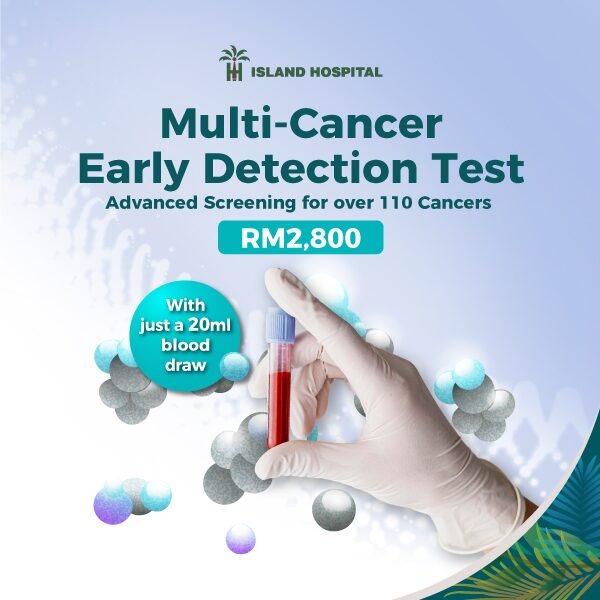
We’re offering our Multi Cancer Early Detection Test at RM2800 – a simple blood test that can identify signs of over 20 different types and 110 subtypes of cancer. It’s especially useful because it can detect cancers that aren’t usually found with standard screèning tests.
This test is mainly recommended for people who are at higher risk for cancer, typically those who are 40 years old or older. It’s used along with other regular cancer screening methods to help catch cancer early.
What’s Included in Your Screening Experience:
✔ Complete medical report
✔ Consultation by Health Screening Physician