

27 Apr Is Alzheimer’s the Same as Dementia? A Helpful Comparison
Is Alzheimer’s the Same as Dementia? A Helpful Comparison
By Island Hospital | 27 April 2026. 10:00:00 AM
What if the first signs of cognitive decline appeared 20 years before the first forgotten name?
For too long, the line between Alzheimer’s and general dementia has been blurred, leading to delayed care and missed windows of opportunity.
While these terms are often swapped in casual conversation, the distinction between them is where effective treatment begins.
In this guide, we break down the clinical differences, explore the diagnosis, and look at how modern AI is changing the way we save the human mind.
What is Dementia?
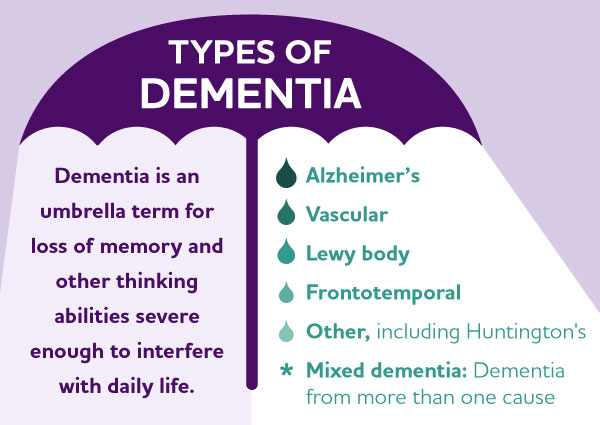
Dementia is not a single disease but rather a syndrome (a collection of symptoms) that affects memory, thinking, reasoning, communication, and daily functioning.
In layman terms, dementia is something like a sore throat which isn’t a disease by itself but a symptom that tells you something is wrong. You can have a sore throat for many different reasons:
- Maybe it’s Strep Throat (The most common cause).
- Maybe it’s a cold.
- Maybe it’s allergies.
In this scenario, Alzheimer’s is like strep throat. It is a specific illness that causes the symptom, often characterised by:
- Amyloid plaques (protein clumps between brain cells)
- Tau tangles (twisted fibers inside brain cells)
These changes slowly damage brain cells, leading to progressive memory loss and cognitive decline.
Stages of Dementia
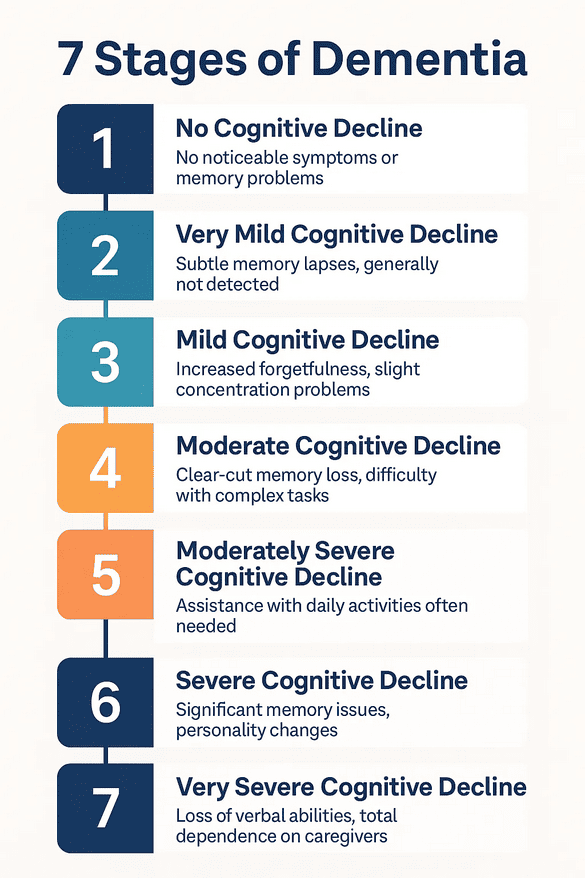
The most widely used framework is the Global Deterioration Scale (GDS), which breaks dementia (especially Alzheimer’s) into 7 stages.
These stages help families and caregivers understand how the condition progresses over time.
Common Causes of Dementia
While Alzheimer’s is the leading cause, several other conditions can trigger dementia symptoms by damaging brain cells and interfering with cell communication:
- Vascular Dementia: Caused by conditions that block or reduce blood flow to the brain, such as a stroke.
- Lewy Body Dementia: Resulting from abnormal protein deposits (alpha-synuclein) in the brain.
- Frontotemporal Dementia: A group of disorders caused by progressive nerve cell loss in the brain’s frontal or temporal lobes.
- Reversible Conditions: Sometimes, symptoms that look like dementia are caused by treatable issues like vitamin deficiencies, thyroid problems, or medication side effects.
Recognising Symptoms of Dementia
Symptoms vary depending on the area of the brain affected, but common early warning signs include:
- Memory Loss: Specifically forgetting recently learned information or important dates.
- Difficulty with Complex Tasks: Struggling to follow a recipe or keep track of monthly bills.
- Confusion with Time or Place: Losing track of dates, seasons, or how they got to a specific location.
- Communication Struggles: Difficulty joining a conversation or finding the “right” words.
- Mood and Personality Changes: Becoming confused, suspicious, depressed, or anxious.
Dementia vs. Alzheimer’s (Quick Comparison Table)
| Feature | Dementia | Alzheimer’s |
|---|---|---|
| Type | Syndrome (set of symptoms) | Specific disease |
| Cause | Multiple possible causes | Brain protein buildup |
| Onset | Varies | Gradual |
| Progression | Depends on cause | Predictable, progressive |
In other words, all Alzheimer’s involves dementia, but not all dementia is Alzheimer’s.
The “Silent” 20-Year Lead-Up Most People Miss
One of the biggest misconceptions is that Alzheimer’s “starts” when you become forgetful.
In reality, researchers now know that biological changes, specifically the buildup of amyloid plaques and tau tangles, can begin up to 10 to 20 years before a single symptom appears.
- The Pre-Symptomatic Phase
Your brain may be fighting the disease long before you fail a memory test. - Cognitive Reserve
People with high “cognitive reserve” (built through lifelong learning and social activity) can often compensate for brain damage longer, staying functional for years longer than expected.
Non-Memory Symptoms of Cognitive Decline
While most people watch for forgotten names, the earliest signs of cognitive decline can sometimes be “stealthy,” affecting how we see, speak, or move long before they touch our memories.
1. Visual Processing Issues (Posterior Cortical Atrophy)
Posterior Cortical Atrophy (PCA) happens when you have 20/20 vision but are unable to pick up a coffee mug because you can’t tell exactly where it is on the table. This is
- The Sign: It’s a problem with how the brain processes what it sees.
- The Reality: A person might struggle to read a line of text or judge the distance of a curb, even while their memory remains perfectly sharp.
2. Language and Speech Difficulties (Primary Progressive Aphasia)
We all forget a word occasionally, but Primary Progressive Aphasia (PPA) is different.
- The Sign: The primary symptom is a slow, steady erosion of language.
- The Reality: Someone might lose the ability to name common objects or understand a simple sentence, yet they can still remember exactly what they did three years ago.
3. Changes in Walking and Movement
Recent studies show that the brain’s “walking center” and “thinking center” are deeply linked.
- The Sign: A subtle change in gait such as becoming slower, more hesitant, poor balancing, or losing that natural “swing” in the arms.
- The Reality: Physical movement often slows down before mental processing does. A change in stride can be a biological “early warning system” for the brain.
4. When Blood Flow Disrupts Thinking (Stroke & Vascular Changes)
Not all dementia begins with gradual degeneration. Sometimes it follows an event like a stroke or repeated small “silent” strokes that go unnoticed.
- The Sign: Sudden or stepwise changes in thinking, attention, or behavior such as difficulty concentrating, slowed thinking, or trouble planning tasks.
- The Reality: A stroke can damage areas of the brain responsible for cognition, and even minor, repeated disruptions in blood flow can accumulate over time.This can lead to vascular dementia, where symptoms may appear abruptly or worsen in noticeable steps rather than a slow, steady decline.In some cases, these vascular changes can also interact with other forms of dementia, making symptoms more complex.
If you’re experiencing several of the symptoms above, it’s important to consult a doctor to properly assess and rule out early cognitive decline.
Vascular dementia is the second most prevalent form of dementia after Alzheimer’s disease. Find out how this can be prevented in our article on: Can a Stroke Lead to Dementia? What You Need to Know.
Identifying Your Risk Factors
While some risk factors are beyond our control, others can be managed through lifestyle choices:
- Age: The strongest known risk factor, though dementia is not a “normal” part of aging.
- Genetics: Family history can play a role, particularly in early-onset Alzheimer’s.
- Cardiovascular Health: High blood pressure, high cholesterol, and diabetes can increase the risk of vascular dementia.
- Lifestyle Habits: Smoking, excessive alcohol consumption, and a lack of physical exercise are linked to higher risks of cognitive decline.
Why Early Detection is a Game-Changer
In the past, a diagnosis often felt like a “dead end.” Today, early detection is about buying time. Catching cognitive changes early provides an answer for you and also a head start.
- Slowing the Clock
New “disease-modifying” treatments work best (and sometimes only) in the earliest stages. - The Power of Lifestyle
From “brain-healthy” diets to targeted exercise, early intervention can build “cognitive reserve,” potentially delaying the move to more severe symptoms. - Empowered Planning
It allows individuals to make their own legal, financial, and care decisions while they are still fully independent. - The Shift
Most hospitals are moving from Reactive Care (responding to a crisis) to Proactive Management (preventing the crisis).
How are Alzheimer’s and Dementia Treated?
Treatment strategies depend entirely on the underlying cause identified during diagnosis.
- Dementia Treatment
If the cause is a vitamin deficiency or metabolic issue, the symptoms may be reversible. For non-reversible types, treatment focuses on managing symptoms through environment modification and specialised therapies. - Alzheimer’s Treatment
While there is currently no cure, doctors use “disease-modifying” drugs to slow progression. Medications like cholinesterase inhibitors are often prescribed to help with memory loss and confusion. - Supportive Care
For all types, physical therapy, occupational therapy, and “brain-healthy” diets are essential to maintaining independence for as long as possible.
The Future of Diagnosis: AI, Blood Tests & Digital Clues
We are entering an era where we don’t have to wait for a person to forget their way home to know something is wrong. This “gap” is being filled by three major breakthroughs:
1. Artificial Intelligence (AI)
Artificial Intelligence can “hear” things the human ear misses. By analysing recorded speech, AI looks for:
- Micro-pauses: Tiny hesitations before nouns or complex verbs.
- Syntax Thinning: Using simpler sentence structures or “filler” words (like “thing” or “it”) more frequently.
- Vocal Jitter: Subtle changes in the physical frequency of the voice that correlate with brain health.
2. Digital Biomarkers
Researchers are now using “passive monitoring” to spot:
- Keystroke Dynamics: Changes in typing speed, error rates, or the time spent hovering over a digital keyboard.
- The “Digital Gait”: Wearables track the exact symmetry and “bounce” of your stride. A loss of rhythm can be an early warning sign.
- Circadian Shifts: AI can detect fragmented sleep patterns that often precede memory issues by years.
3. The Blood Test Revolution
Until recently, confirming Alzheimer’s required an expensive PET Scan or a painful Spinal Tap.
- The Breakthrough: New blood tests can now detect Amyloid and Tau (the specific proteins that “clog” the brain) with incredible accuracy.
- The Result: Diagnosis is becoming as simple, cheap, and accessible as a routine cholesterol check.
The Cultural Lens: Overcoming the Stigma
For many families and communities, memory loss is deeply personal and often misunderstood.
In some cultures, it may be quietly dismissed as “just a normal part of aging” or treated as something that should be handled privately within the family. These beliefs usually come from a place of respect, protection, or even fear of stigma.
But this silence can make it harder to recognise when something more serious is happening.
As a result, many people delay seeking help, which can mean missing the window for early support, treatment, and planning.
Acknowledging memory changes early is about giving them the best chance to live well, for as long as possible.
Preserving the “Self”
When the “logic” part of the brain begins to fade, the “emotional” part often remains vibrant and hungry for connection.
Reminiscence therapy focuses on bringing familiar moments back to life, helping individuals stay connected to who they are. This can include:
- Looking through old photos and albums as a way to reinforce their identity. It reminds them (and you) of the person they have always been: the traveler, the artist, the parent, the friend.
- Listening to familiar songs from earlier years. Music is often the last thing the brain forgets. Playing a favorite song from their youth can “unlock” a person, bringing back a sparkle in their eyes and even physical energy.
- Sharing stories about meaningful life experiences. Even if the details are fuzzy, the feeling of a story remains. Encouraging a loved one to share their “greatest hits” validates their life’s work and keeps their spirit central to the conversation.
Caregiver Reality
Caring for a loved one with memory loss is an act of deep compassion but it can also be overwhelming, especially for those in the “sandwich generation.”
Many caregivers find themselves caught between two equally important roles:
- Raising children who still depend on them
- Supporting aging parents who increasingly need care
It’s a constant balancing act, and it’s okay to admit that it can be exhausting.
Caring for Yourself Matters Too
To continue caring for others, you also need to care for yourself. Small, intentional steps can make a big difference:
- Set boundaries to protect your time and energy
- Reach out to support groups
- Schedule personal downtime, even if it’s just a few quiet minutes a day
Taking care of yourself first is what allows you to keep showing up with strength, patience, and compassion for your loved one.
Not everything we blame on ageing should be ignored. Parkinson’s is one of the many other conditions requiring early attention. Check out this complete guide about Parkinson’s Disease.
Don’t Wait for It to Get Worse
Memory loss isn’t always what it seems and understanding the difference between dementia and Alzheimer’s is the first step toward taking control of your brain health.
If you or a loved one are noticing changes no matter how small, don’t brush it aside as “just aging.
At Island Hospital, we believe that “knowing is better than wondering.” Our neurology team uses advanced screenings to determine if these changes are related to a treatable condition or a form of cognitive decline.
The earlier you act, the more you can protect what matters most. Schedule a cognitive screening and speak to our neurologist today.
FAQs
Why do some people experience symptoms much later than others, even if their brain changes are the same?
The timing of symptoms often depends on something called cognitive reserve. Think of this as a “mental savings account.”
Throughout your life, every time you learn a new skill, solve a complex problem, or engage in deep conversation, you are making a “deposit” into this account.
When a disease like Alzheimer’s begins to cause damage (taking “withdrawals” from the brain), a person with a “large savings account” can continue to function normally for much longer.
Their brain is physically resilient enough to find “detours” around the damaged areas.
Research shows that you can strengthen your brain’s resilience at any age through:
- Lifelong Learning: Picking up a new language, a musical instrument, or a complex hobby.
- Social Connectivity: Regularly engaging with friends, family, and community groups.
- Analytical Thinking: Occupations or activities that require constant problem-solving.
- Education: Early and continuous formal or informal education.
How do I know if my memory lapses are a normal part of getting older or a “Red Flag” for something serious?
It is natural for the brain to slow down slightly as we age, much like our physical joints might get a bit stiffer. However, the key difference lies in function.
Normal aging is an inconvenience but a “Red Flag” is an interference with daily life. Here’s a breakdown of their differences:
| Normal Aging | Reg Flags (Seek Medical Advice) |
|---|---|
| Occasional Forgetting Forgetting a name but remembering it later in the day. | Persistent Memory Loss Asking the same question multiple times or forgetting recently learned information. |
| Misplacing Items Putting your glasses down and eventually retracing your steps to find them. | Losing the Trail Putting items in "strange" places (like a wallet in the freezer) and being unable to retrace steps. |
| Slower Processing Taking a bit longer to learn a new tech gadget or software. | Confusion with Familiar Tasks Struggling to follow a well-known recipe or manage monthly bills. |
| Social "Pauses" Occasionally struggling to find the exact "right" word during a fast-paced talk. | Losing the Conversation Stopping in the middle of a sentence and having no idea how to continue. |
| Occasional Bad Choices Making a poor financial or social decision once in a while. | Poor Judgment Showing a consistent change in grooming, hygiene, or being easily fallen for scams. |
How long can a person live with dementia?
There’s no single timeline. On average, people live about 4 to 10 years after diagnosis, but some live 15–20 years or longer, especially if diagnosed early and supported well.
Life expectancy can vary widely based on:
- Type of dementia (e.g., Alzheimer’s vs. vascular dementia)
- Age at diagnosis (younger individuals often live longer)
- Overall health and existing medical conditions
- Stage at diagnosis (early vs. late detection)
- Quality of care and support
On the other hand, the timeline for people with Alzheimer’s disease is different whereby life expectancy is often 8–12 years on average after diagnosis, though some may live longer.
What is the 2 finger test in dementia?
The “2 finger test” is not an official medical test for dementia. It’s an informal screening task sometimes used to observe coordination, attention, and the ability to follow simple instructions.
A patient may be asked to:
- Hold up two fingers
- Copy the examiner’s finger position
- Or touch two fingers together on command
Difficulty with this task might suggest issues with:
- Motor coordination
- Attention and processing speed
- Understanding simple commands (comprehension)
These can be affected in some types or stages of dementia but also in many other conditions.
Can dementia symptoms be reversed?
This is a critical distinction.
While most forms of dementia (like Alzheimer’s) are progressive and irreversible, some “dementia-like” symptoms can be cured if the underlying cause is treated.
Potentially Reversible Causes:
- Nutritional Deficiencies: Lack of Vitamin B12 can mimic cognitive decline.
- Thyroid Problems: An underactive thyroid can lead to “brain fog” and memory issues.
- Medication Side Effects: Certain drugs, or interactions between multiple medications, can cause confusion.
- Normal Pressure Hydrocephalus: A buildup of fluid in the brain that can be treated with a shunt.
- Depression: Sometimes referred to as “pseudodementia,” severe depression can cause significant memory and concentration problems in older adults.